
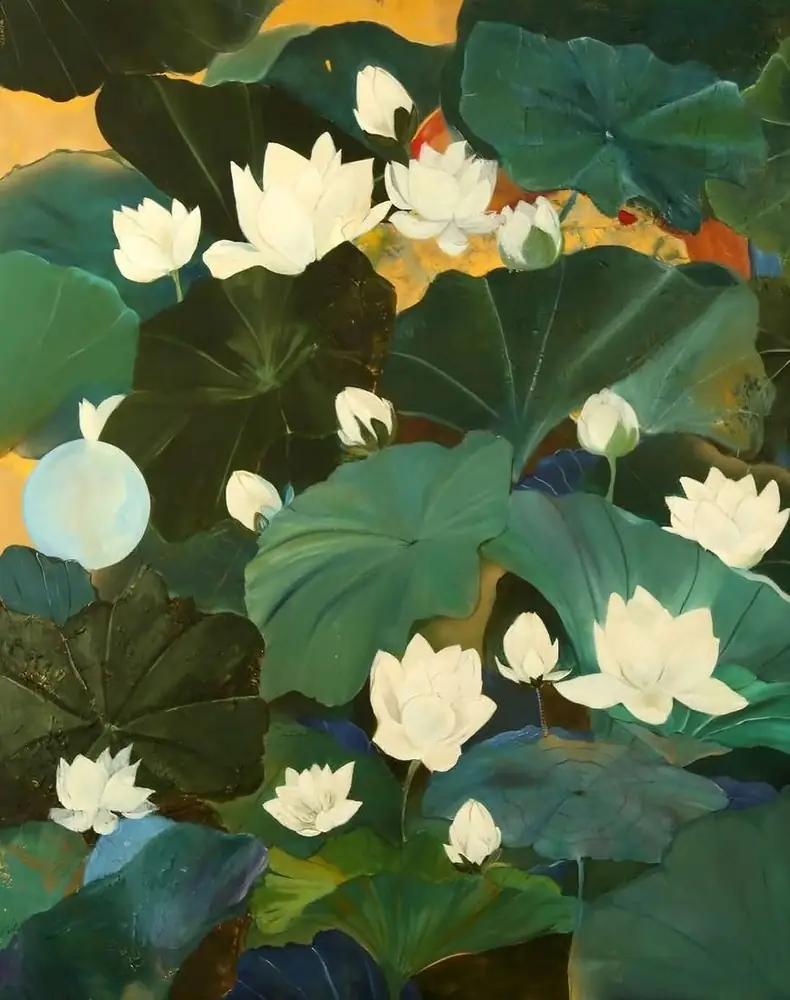
2026
March 2026 · Chennai
Padma
Nine artists, twenty-seven works and a single form, the lotus, in painting, mixed media and cast bronze. Our first gathering, and a most memorable evening.
View the works from Padma →
Paintings, sculpture and heirloom objects, chosen one at a time from artists across the subcontinent, and offered by conversation.
View the collection →Each piece is chosen by Rajani herself, and each enquiry answered in her own hand. A private collection, assembled with the patience of an earlier age and the eye of this one.
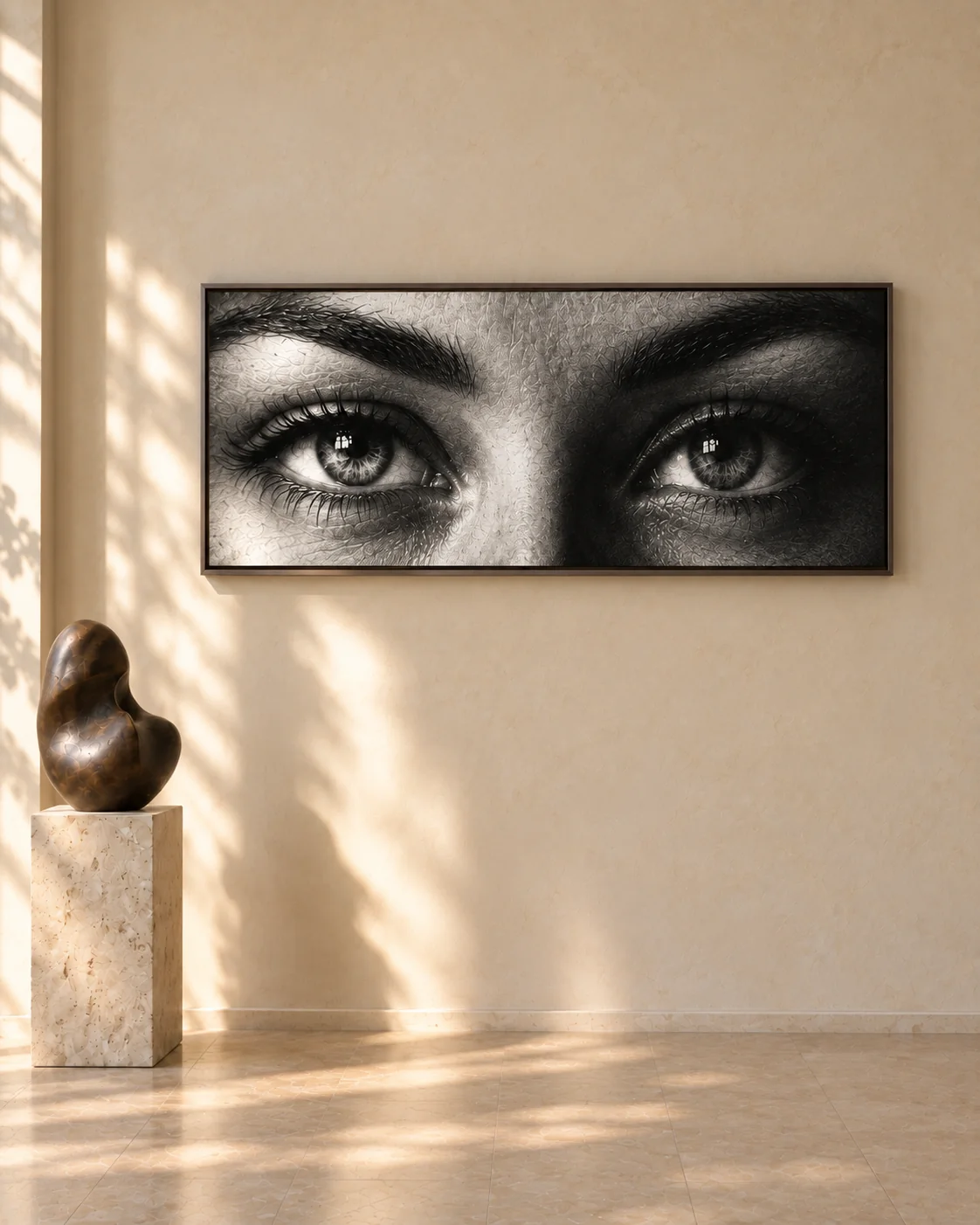
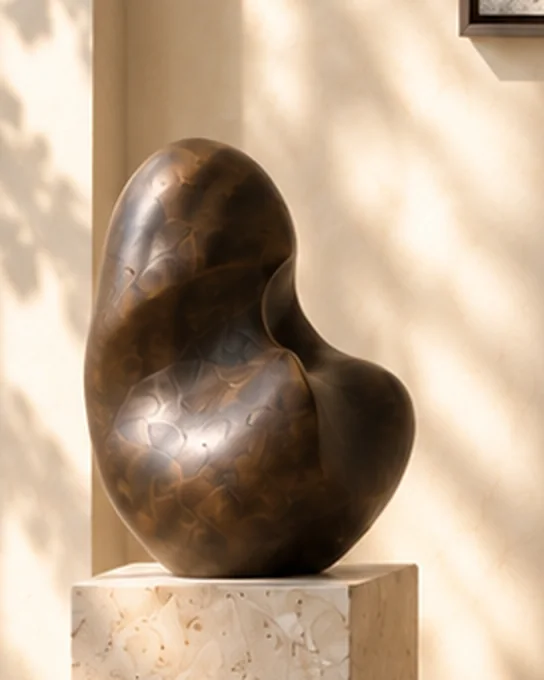
As a collective, Kanam introduces its collection through the artists who make it. Each is welcomed personally, presented by name, and held close, much as one would family.
Here for a moment.
Kept for a lifetime.
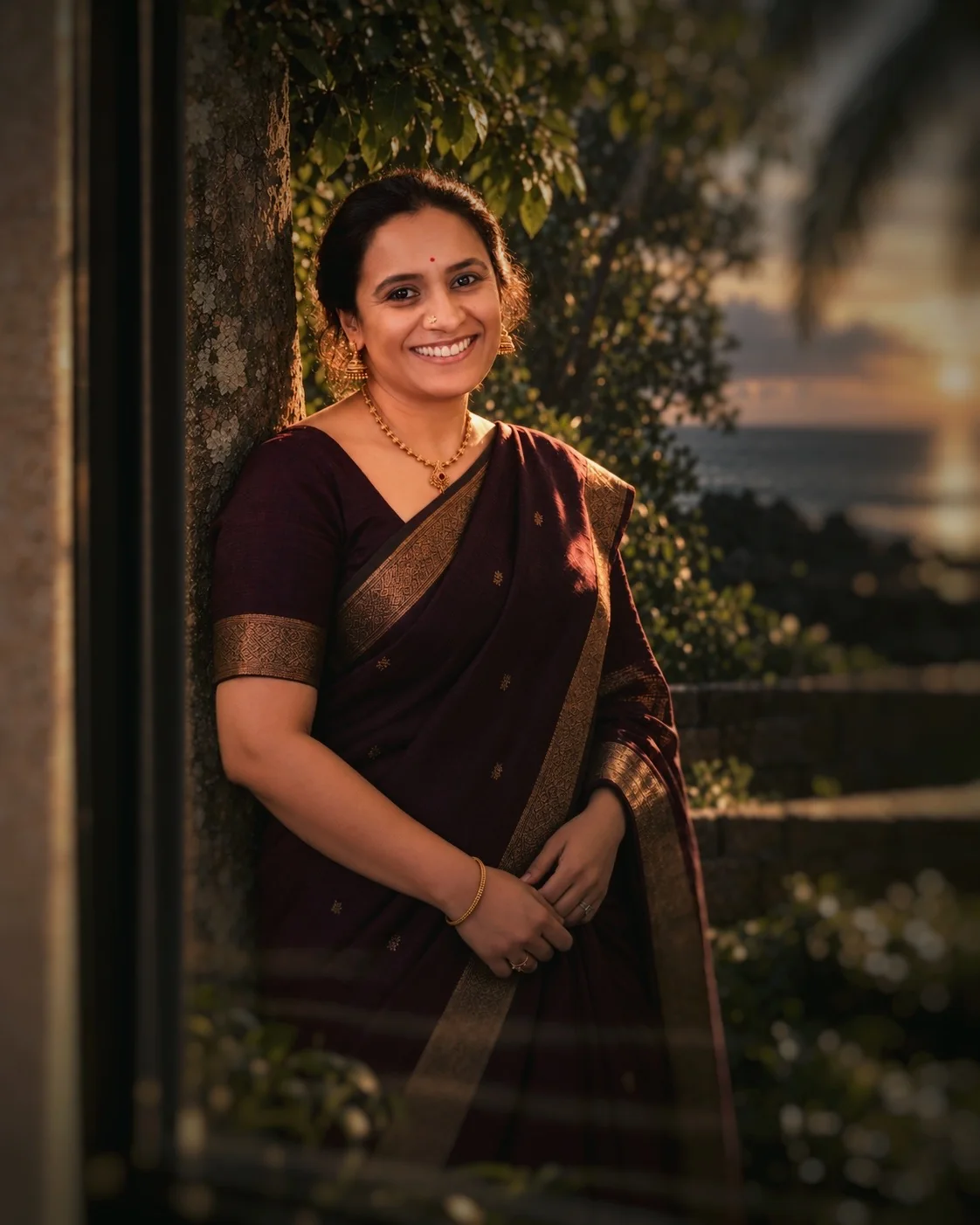
An architect and interior designer of twenty-five years, and a collector for rather longer. Kanam grew from the pieces Rajani kept finding along the way: a canvas here, a cast lamp there, a piece of worked gold, each deserving a considered place.
Each piece is chosen by her; each letter, answered by her.
Kanam pieces in the homes and spaces they now belong to.
Each acquisition arrives with a signed Certificate of Authenticity, and an invitation to the Kanam Circle: early access to every gathering, your certificates kept safe online, and recommendations chosen personally for you.
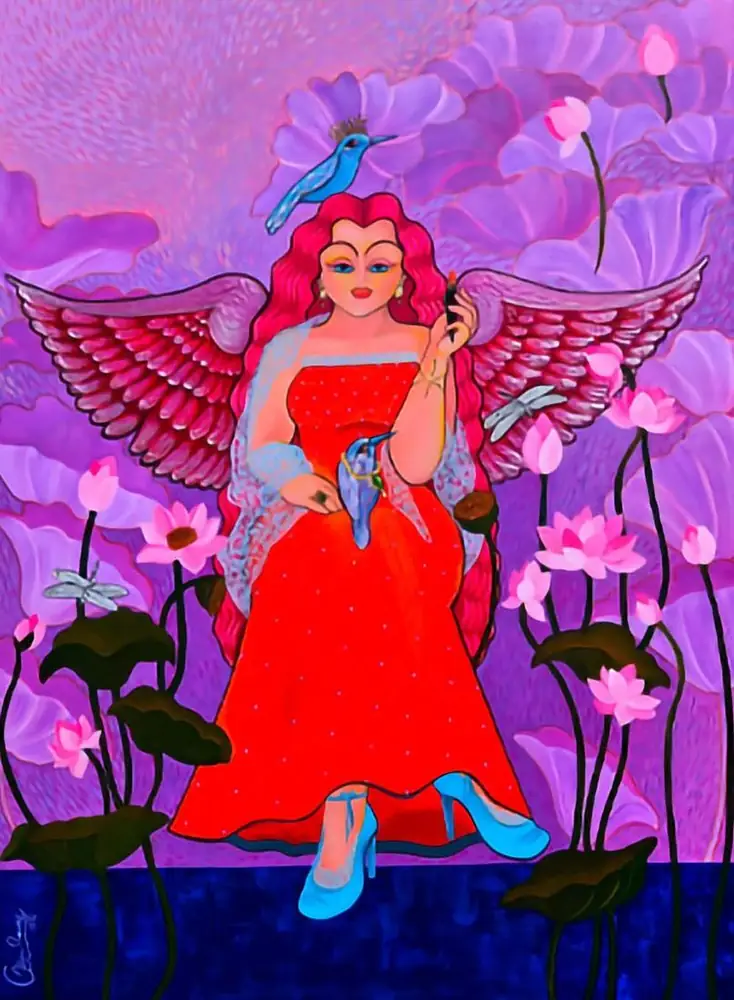 The Noble LadyAlka Choudhary
KNM-COA-2026-0001
The Noble LadyAlka Choudhary
KNM-COA-2026-0001
Paintings, sculpture and collectibles, with the collection turning each season. Do take your time.
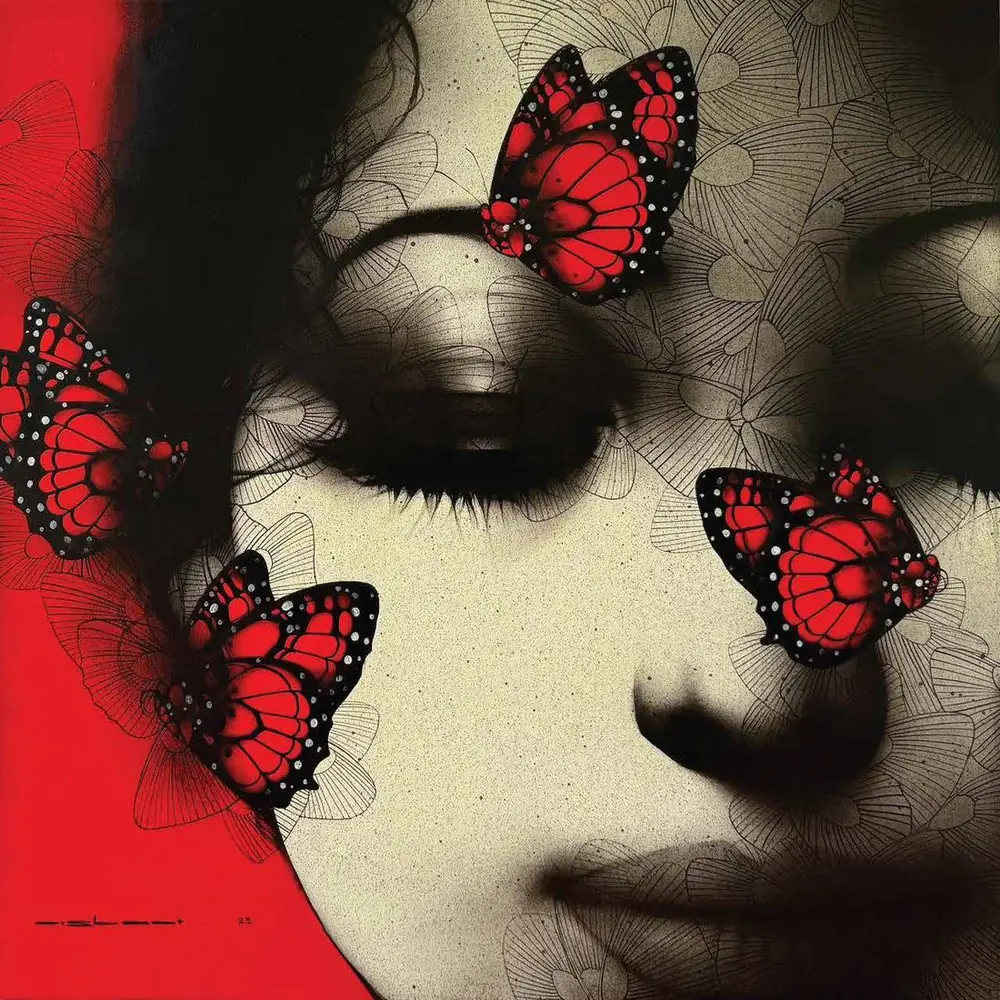
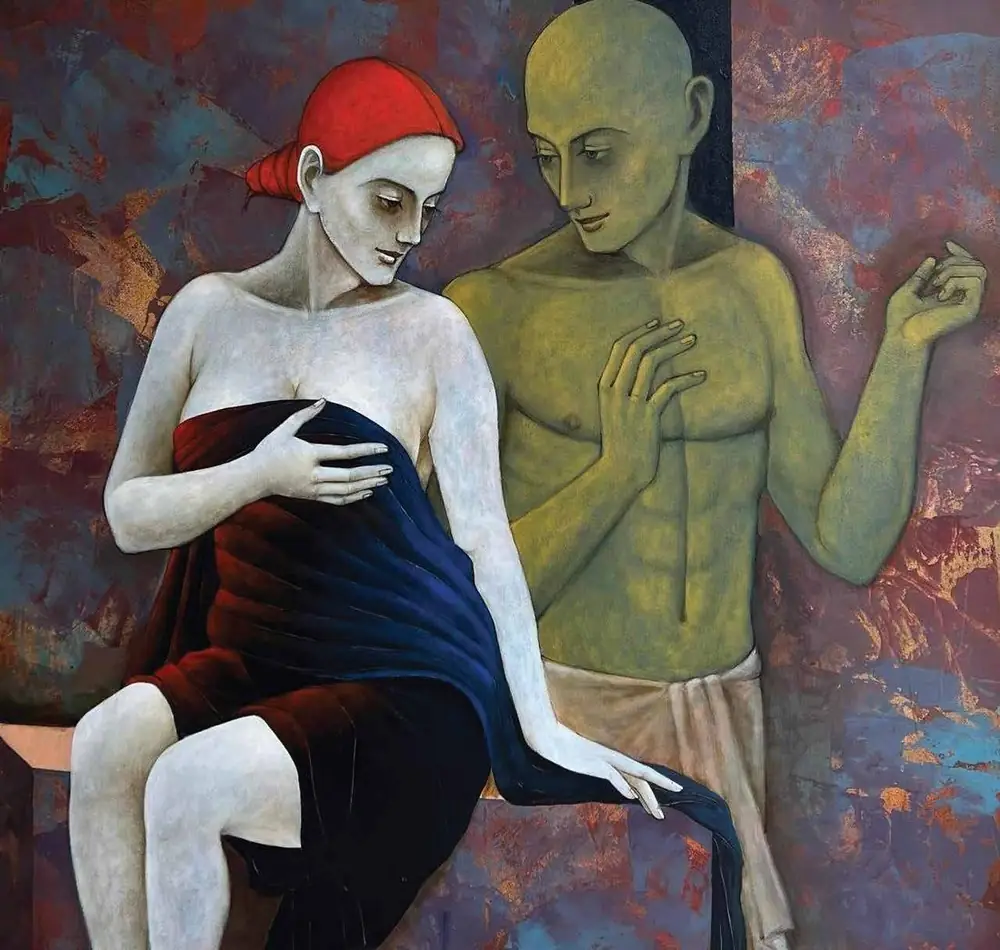
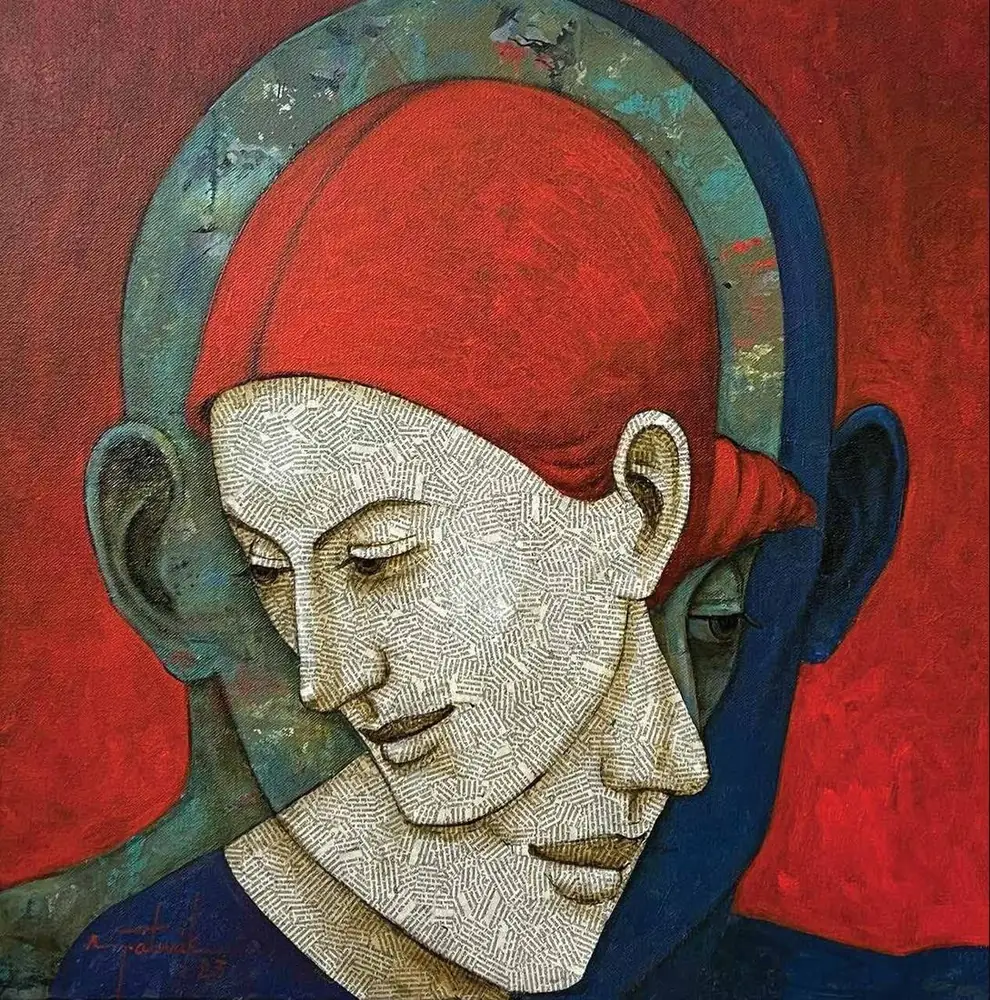
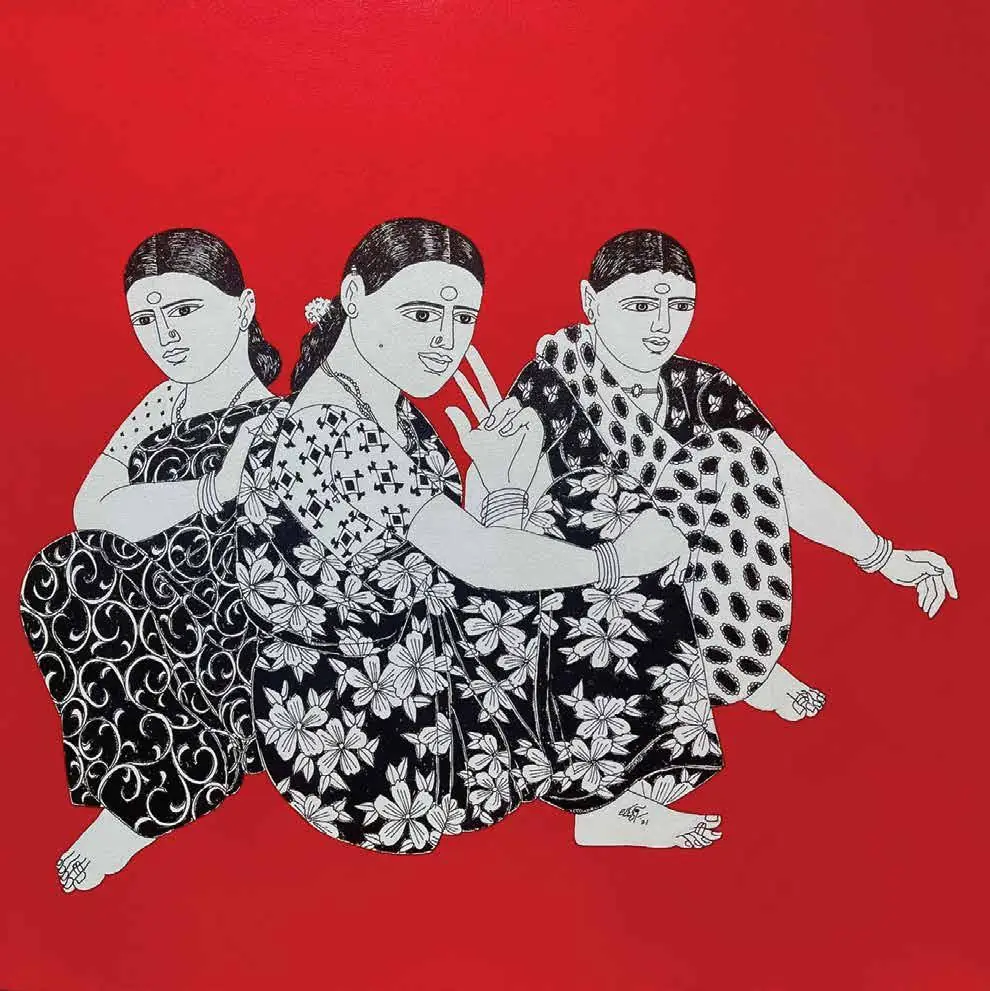
View the collectionWalk through and you'll meet a Jaipur painter's winged women, bronze goddesses first shown at Padma, a round canvas in lotus pink from Pune, and a Mumbai artist's quiet meditations on the avatars. Some of these names you may know already; the rest, we suspect, you soon will. Every work here is an original, and any one of them could be on your wall.
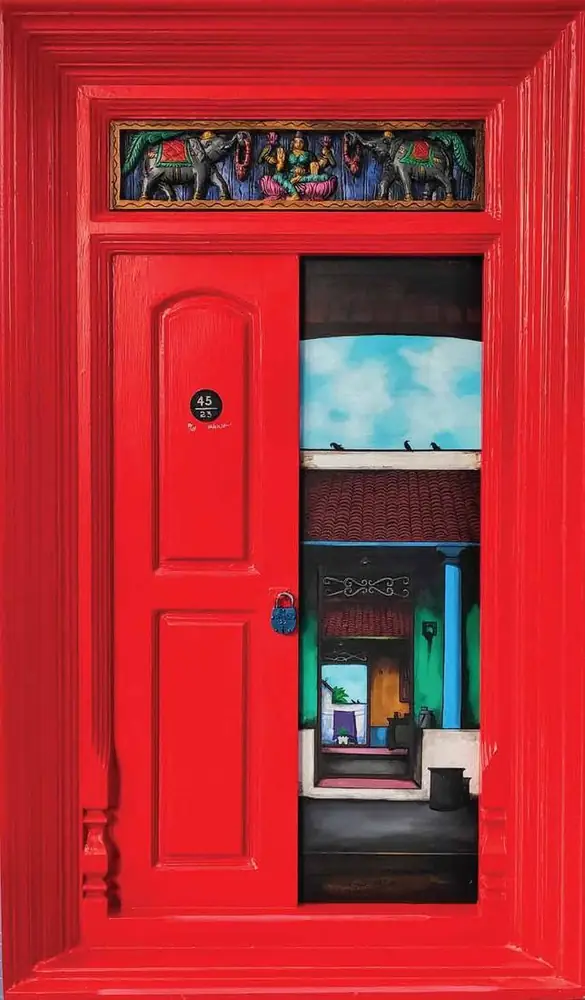
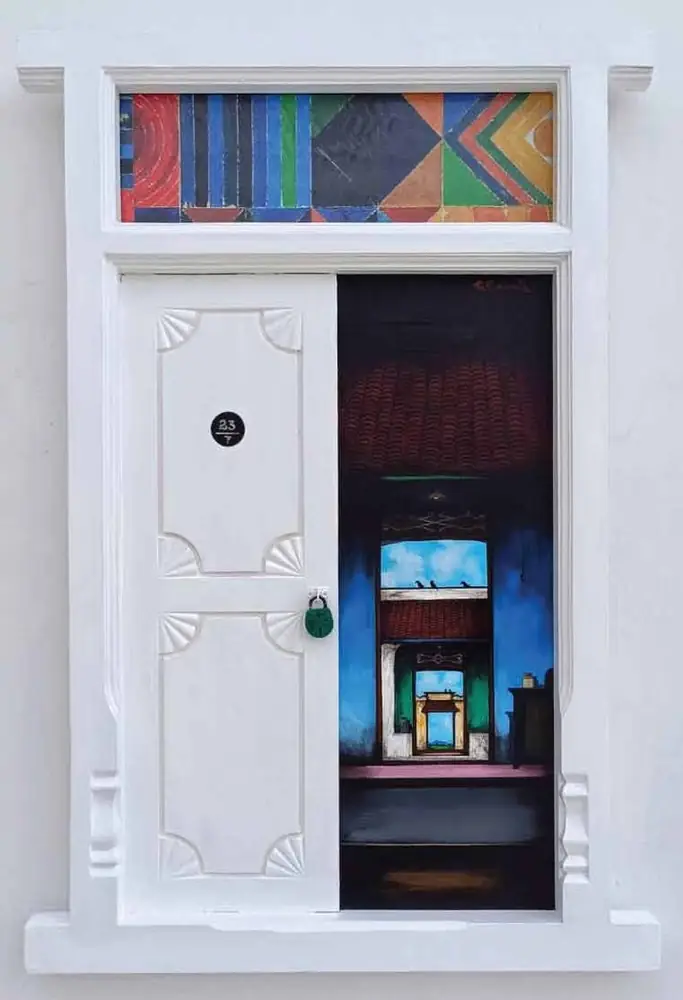
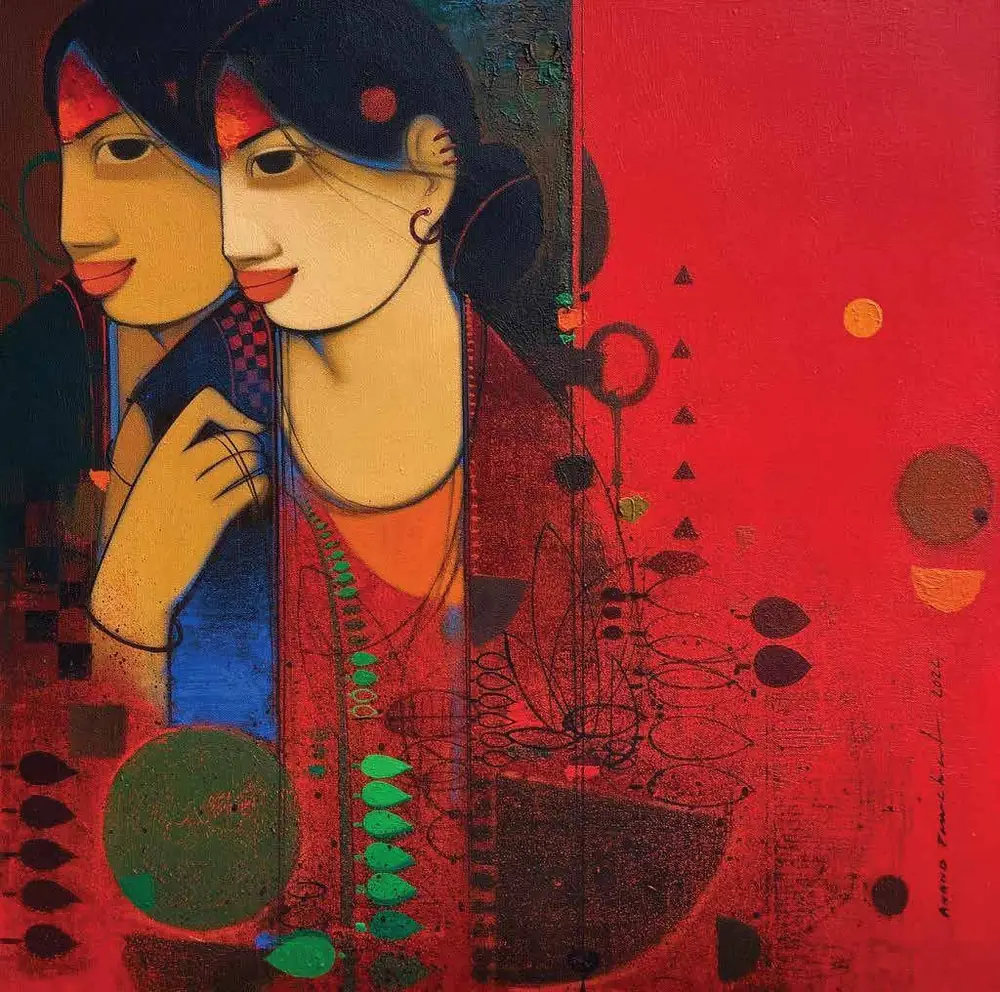
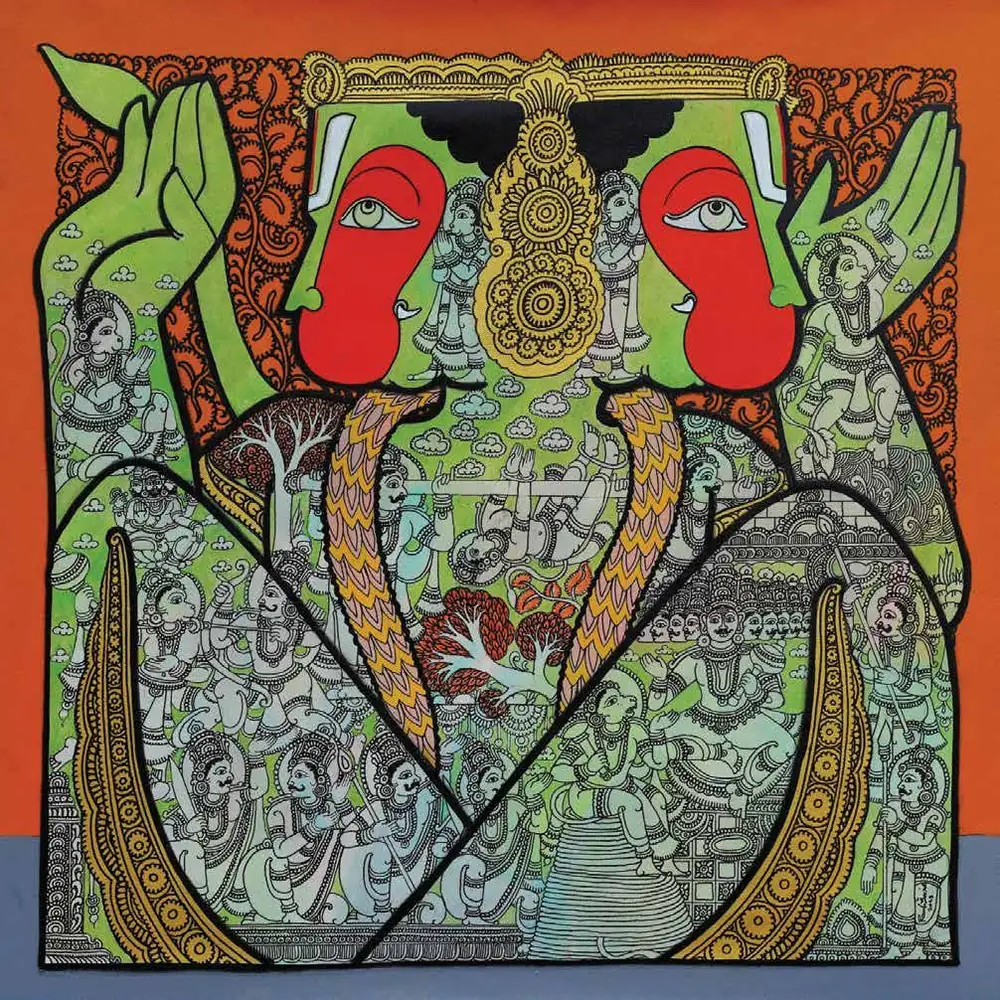
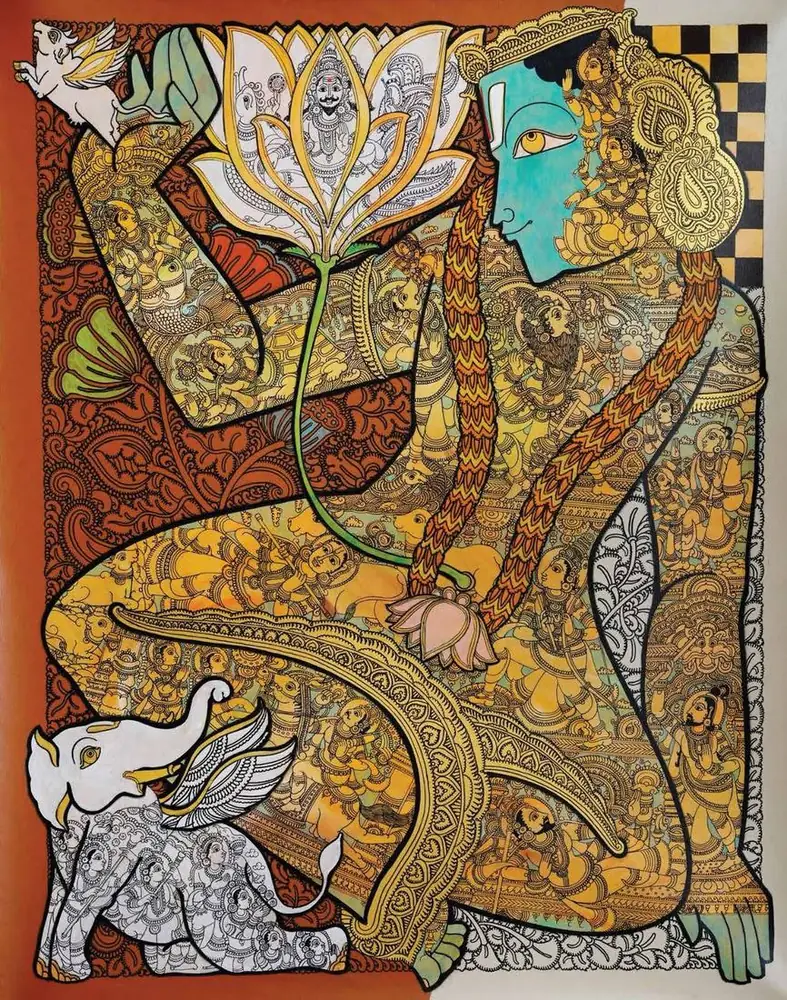
Nothing here just yet. Tell us what you have in mind, and we shall go looking.
Write about any piece and Rajani will reply herself, with its provenance, its price, and a considered word on how it might live in your home.
Request the catalogueA considered circle of painters and sculptors from across the subcontinent, whose work we are proud to hold. Each is presented in full: their story, their practice, and the works presently with Kanam.
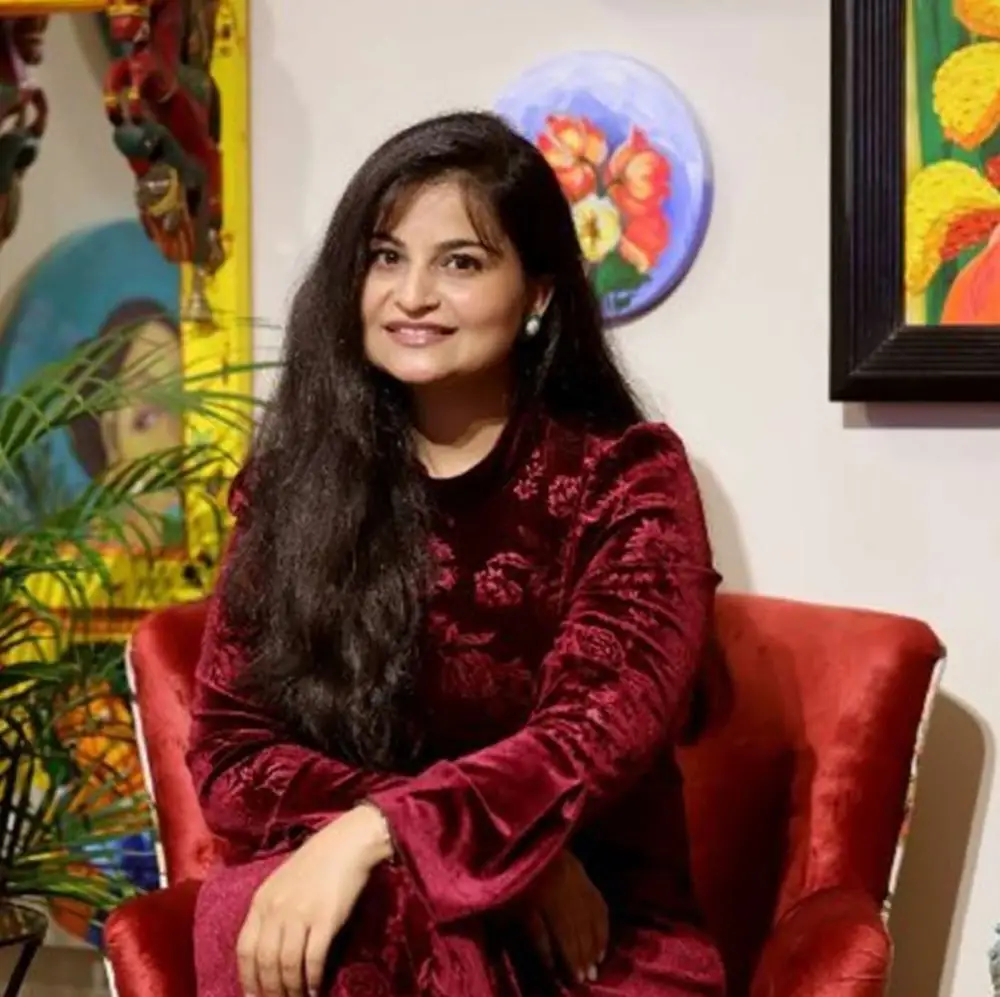
Alka Choudhary is a Jaipur-based contemporary figurative artist who believes life is all about happiness. Painting since her teenage years, she draws…
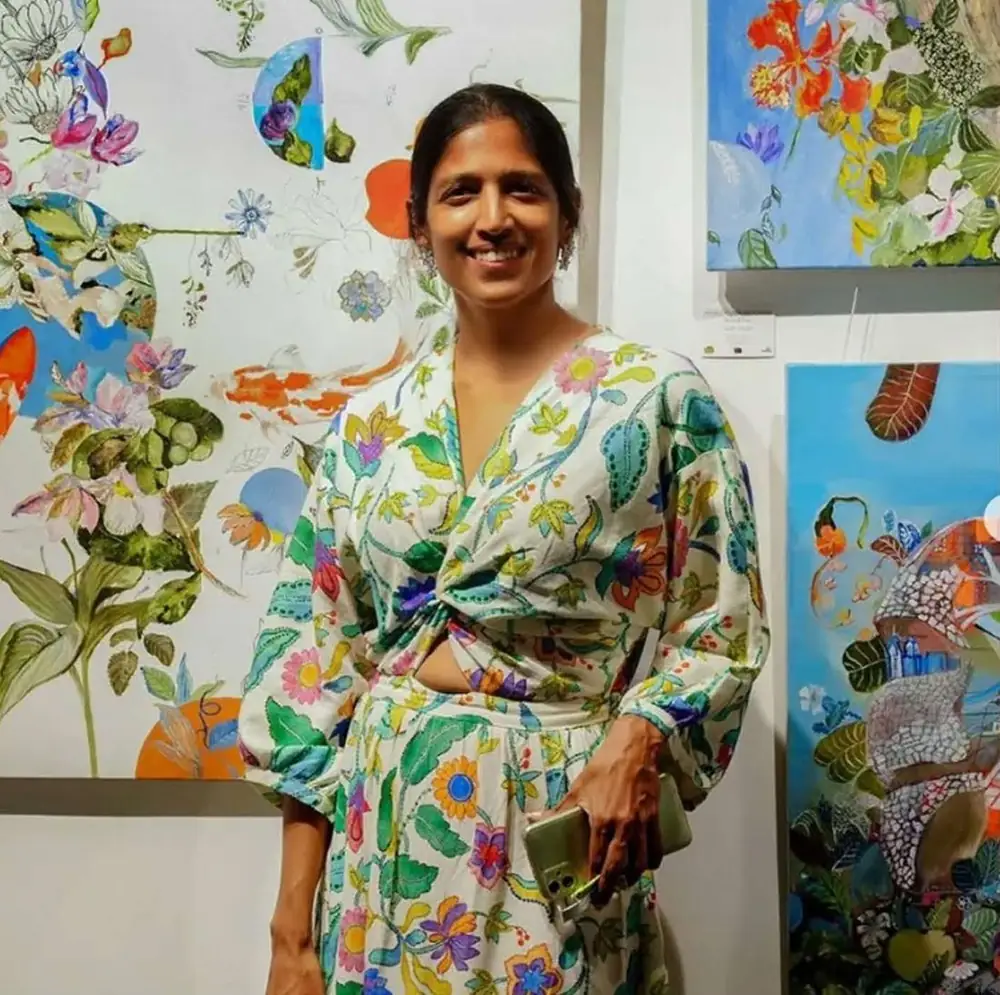
Aswatha is the name under which Chennai-based artist Anjali Rajkumar signs her work, a name connected to her spiritual pursuits. Her practice…
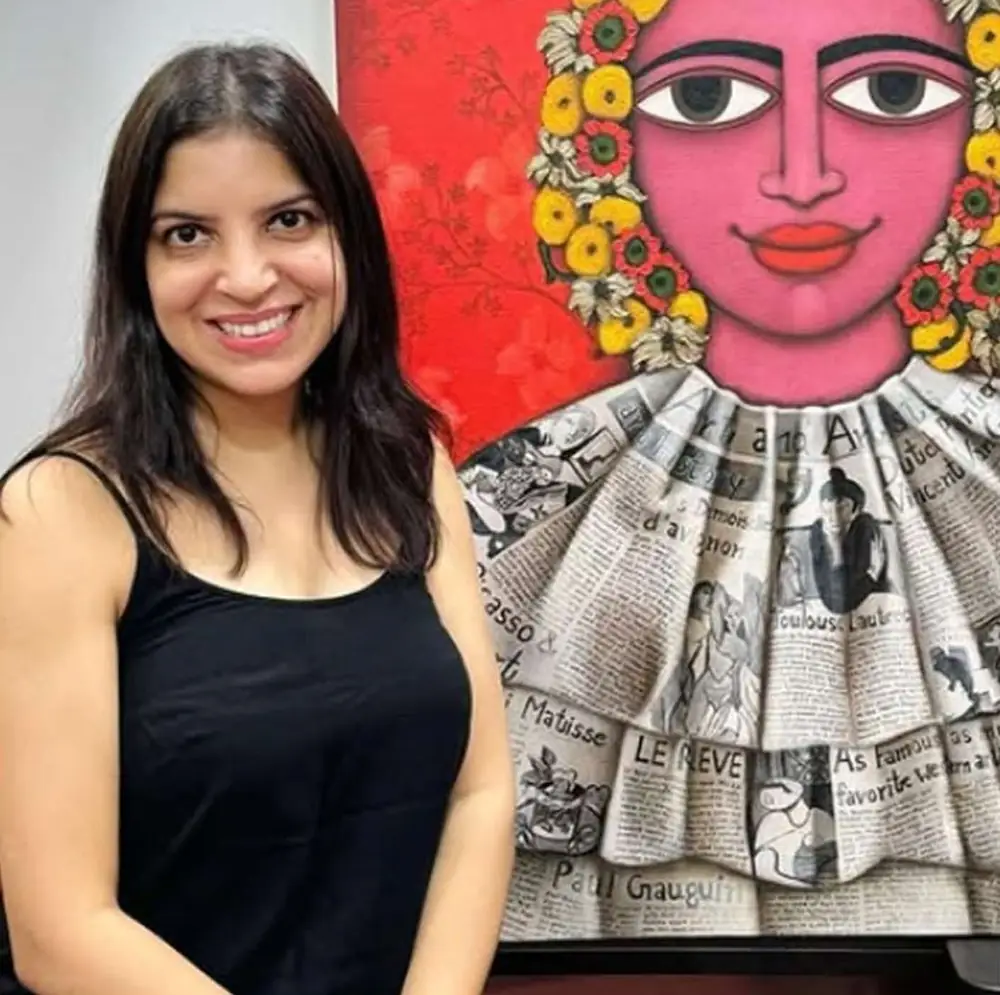
Bhoomika Dange draws on masters such as Vincent van Gogh and Pablo Picasso, weaving their influence into newspaper-based works in which the newsprint…
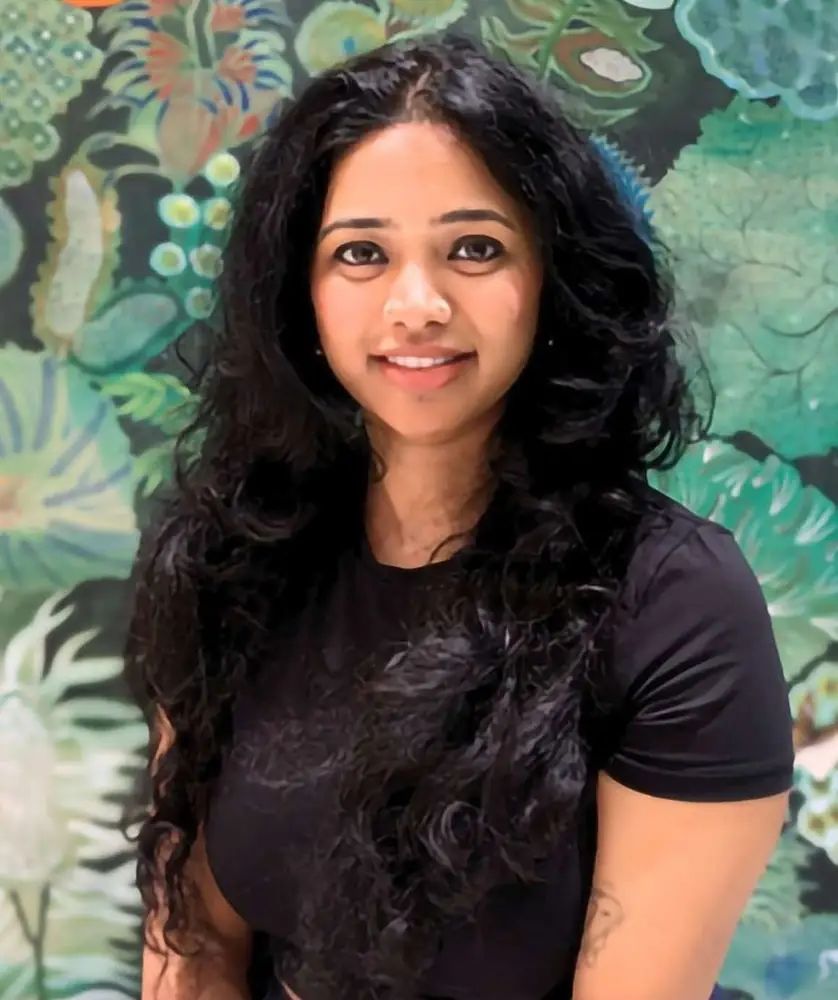
Priyanka Aelay's work draws deeply from nature, folklore and mythology. Using forests, flora and fauna as her visual language, she creates dreamlike…
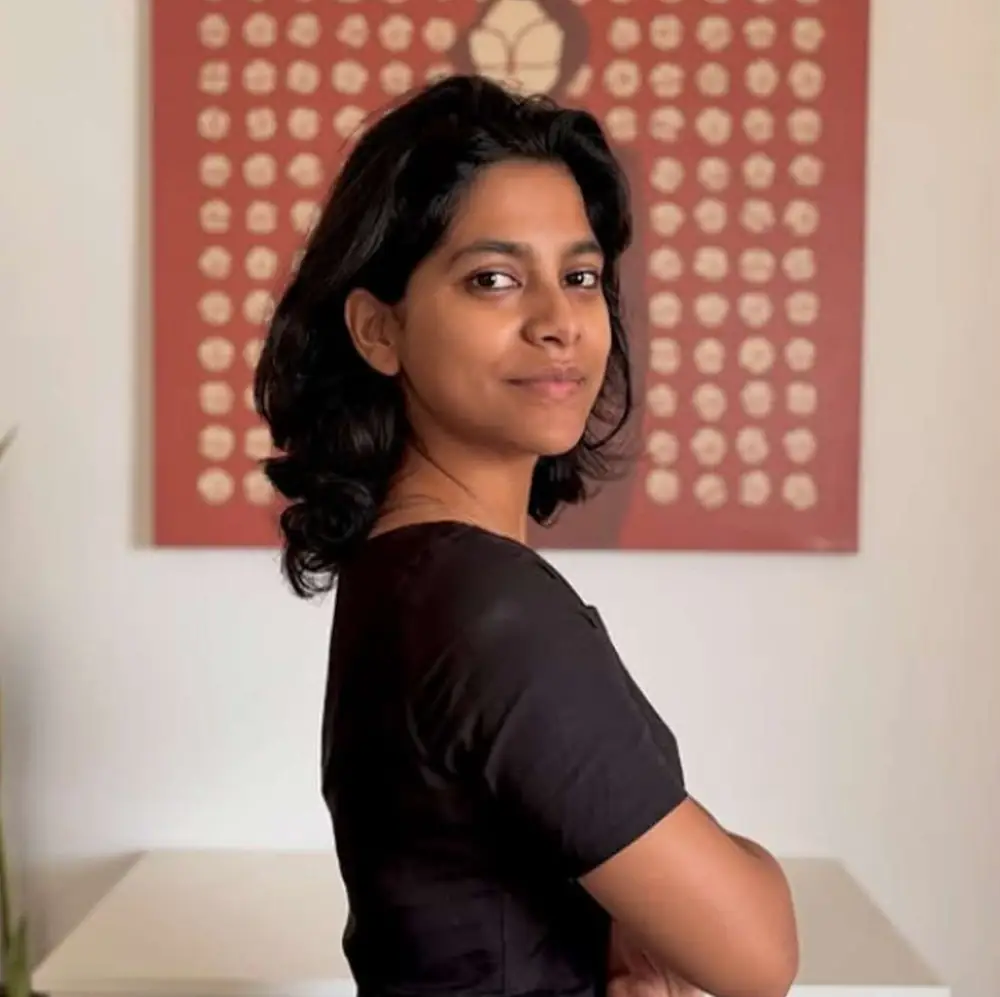
Rani Banerjee is a modern cubist and non-traditional portrait artist based in Bangalore. Her work explores emotion, abstraction and complexity,…
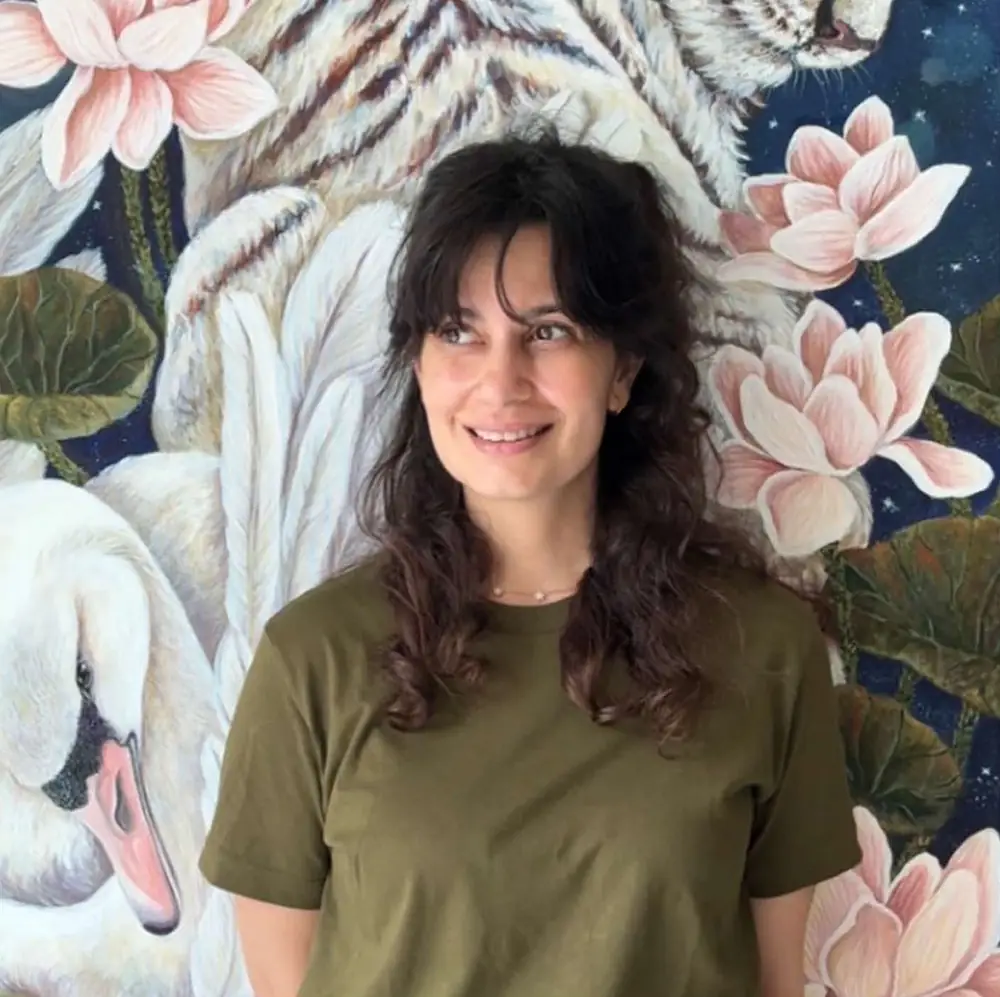
Shirin Watwani paints the natural world closest to her heart. Through close observation and a skilled hand, she brings alive not only the beauty of…
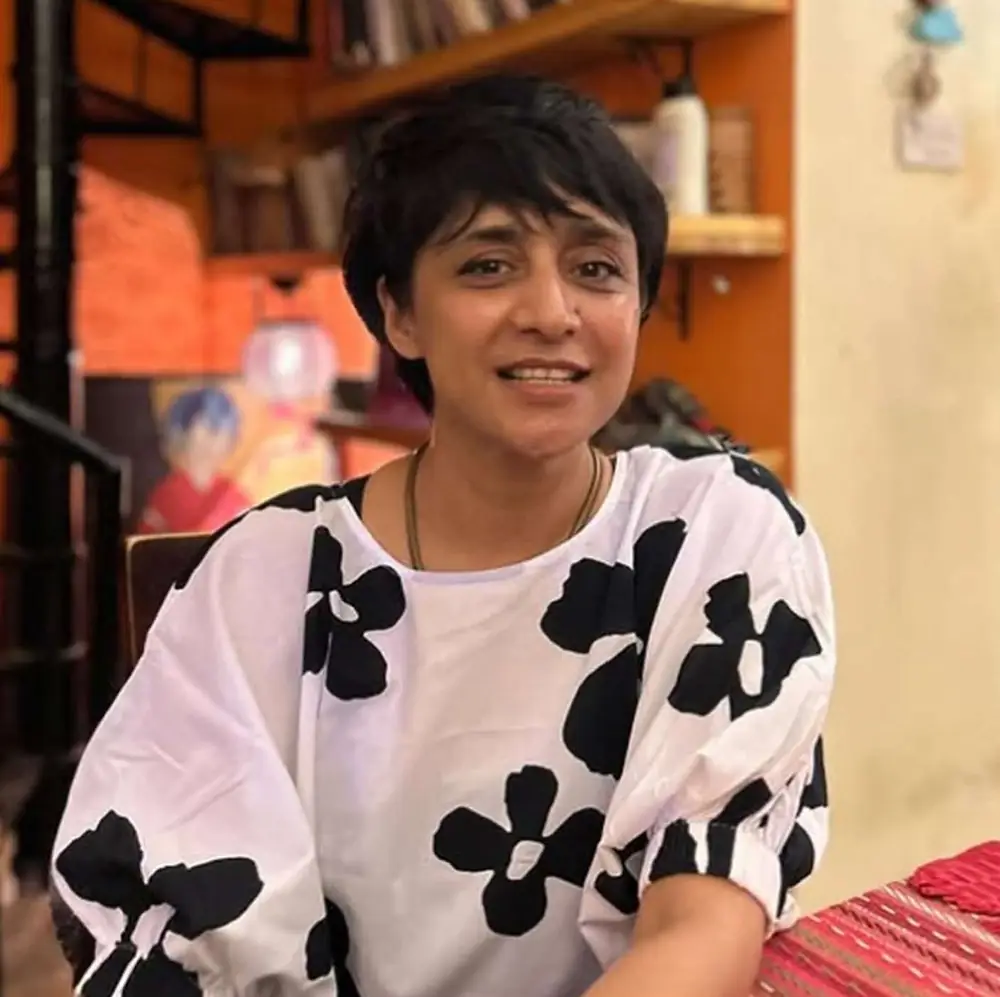
Smruthi Gargi Eswar is a painter, graphic artist and storyteller based in Bangalore. Trained at the Faculty of Fine Arts, Maharaja Sayajirao…
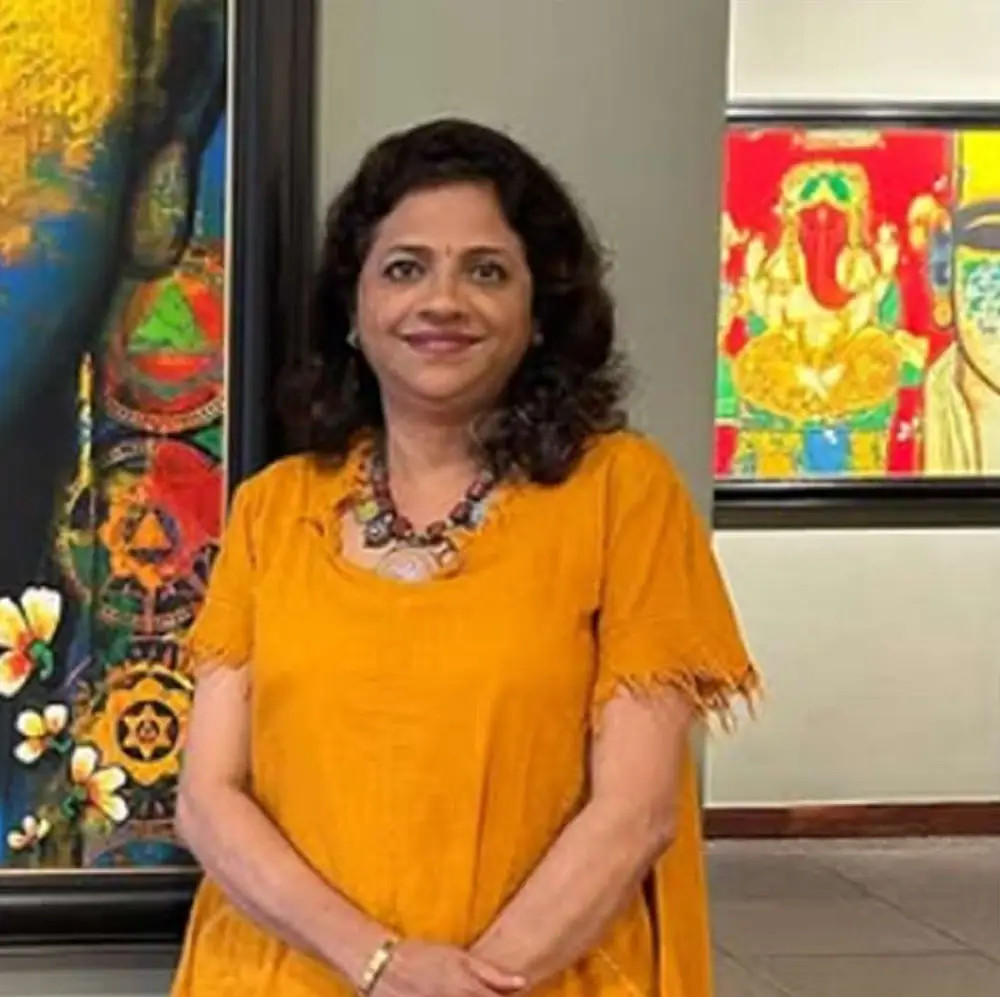
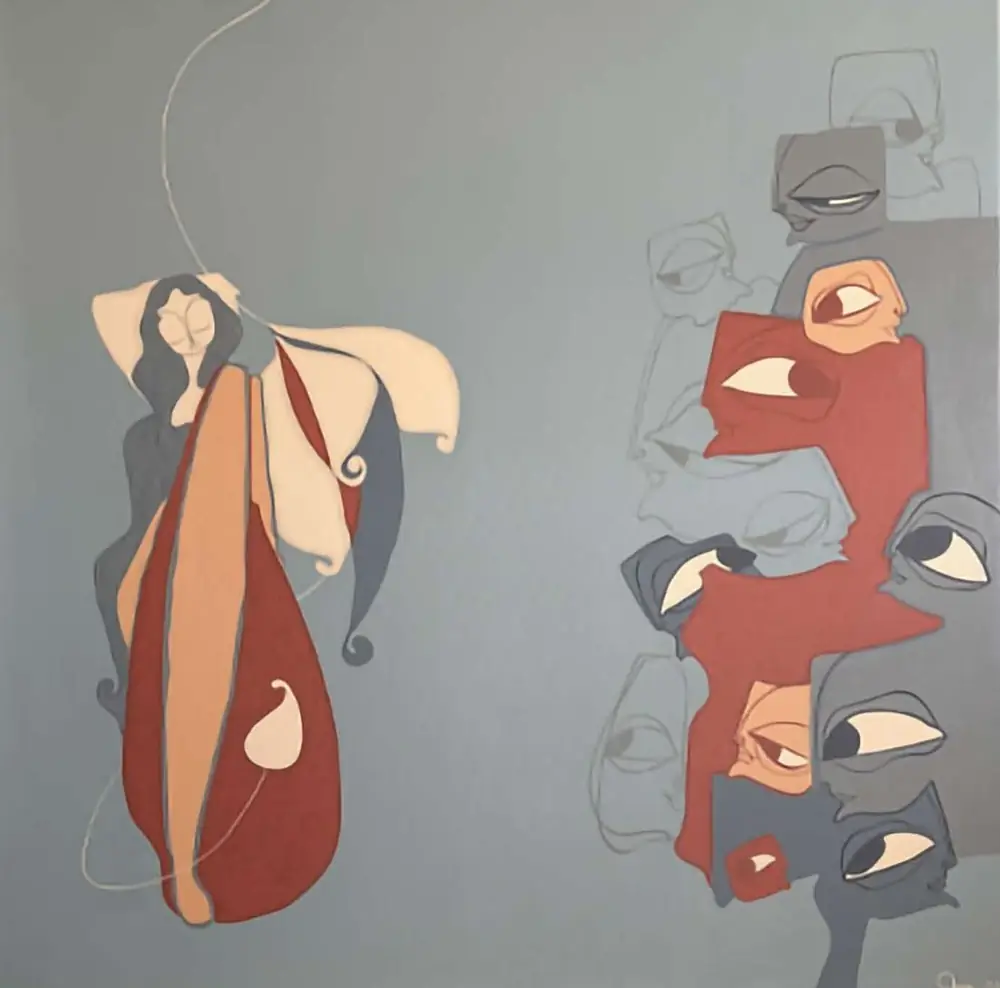
Sujata Achrekar is a Mumbai-based artist known for evocative figurative paintings marked by hypnotic faces and rich earthy tones. Working primarily…
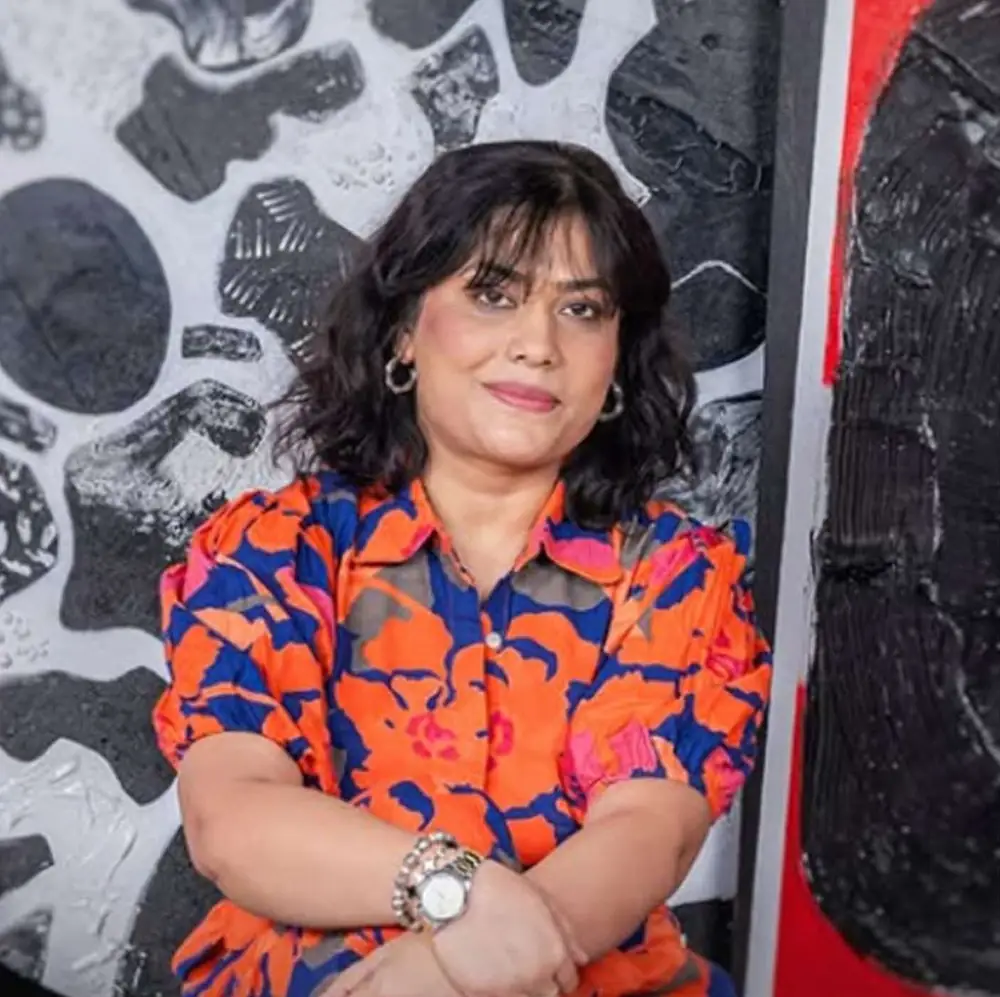
Tanvi Kulshreshtha creates vibrant mixed-media works full of colour, texture and energy. Drawing on places such as Rajasthan, Bangalore and Pune, her…
Figurative painting in acrylic on linen canvas.
Two large-format paintings, each 48 × 48 in.
Figurative painting in acrylic, pen and ink on canvas.
Figurative painting in acrylic on linen canvas.
Figurative painting in mixed media on canvas.
A few times each year the collection leaves the page for a room, with the artists present, other disciplines invited in, and the conversation unhurried. Something of a mehfil for the eye: complete for an evening, then on to the next. Invitations go first to our circle.
Nine artists, twenty-seven works and a single form, the lotus, in painting, mixed media and cast bronze. Our first gathering, and a most memorable evening.
View the works from Padma →The next evenings are being shaped now. As ever, the details reach our circle first.
Join the list →Join the list, and each gathering will reach you, prices and all, before it reaches anyone else.
Join the listKanam in Spaces follows the work beyond the gallery, into the residences, offices and private rooms where it now lives. Each piece is seen in its setting, with the designer credited and the artist named: how a painting or a bronze holds a room, and how a room, in turn, holds it.
Homes and spaces with Kanam pieces are being photographed now.
Designers and architects are most welcome to the trade catalogue, with dimensions, provenance and images ready for a presentation, and an early look at what is coming next.
Request the trade catalogueOn the art forms, the people who make them, and what we notice along the way. Brief, considered, and mostly pictures.
Nine artists were given one very old form to answer. Nine artists were given one very old form to answer. The lotus came back as a garden, a goddess, a mandala in lotus pink, and a flower rising clean from dark water.
Padma began with a simple invitation: bring us your lotus. Alka Choudhary answered with the Noble Lady and her open wings; Aswatha with Awakening; Tanvi Kulshreshtha with Padmanubhuti, a painting whose very name means the feeling of the lotus.
Seen together in one room, the paintings and bronzes made a rather lovely case: that a symbol this old still has a great deal left to say.
Continue reading →Growing up among the women of Rajasthan, in all their finery and ornament, gave Alka her signature figure: a lady with imaginary wings.
Read →On the cast bronzes first shown at Padma, and why a sculpted figure rewards a long, unhurried look from every side.
Read →One considered piece, given a wall of its own, can set the whole tone of a room. A few thoughts on choosing it.
Read →Trained in Baroda and Bangalore, Smruthi paints the older, quieter tales that sit between the well-known ones, in a language entirely her own.
Read →Studio visits, long conversations over filter coffee, and a great deal of looking, all before a single piece appears on Kanam.
Read →Nine artists were given one very old form to answer. The lotus came back as a garden, a goddess, a mandala in lotus pink, and a flower rising clean from dark water.
There is a particular hush that falls over a room when everyone in it is looking at the same flower. At Padma, Kanam's first gathering, held in Chennai in March 2026, that flower was the lotus, and nine artists had been asked to bring theirs.
On the face of it, a modest brief. The lotus is perhaps the most familiar form in the whole of South Asian art. It holds up goddesses, blooms across temple ceilings, and has been embroidered, carved, cast and painted onto almost anything that stands still long enough. Familiarity of that order is a challenge in itself. Ask nine artists to answer a symbol this old, and one learns a great deal about each of them.
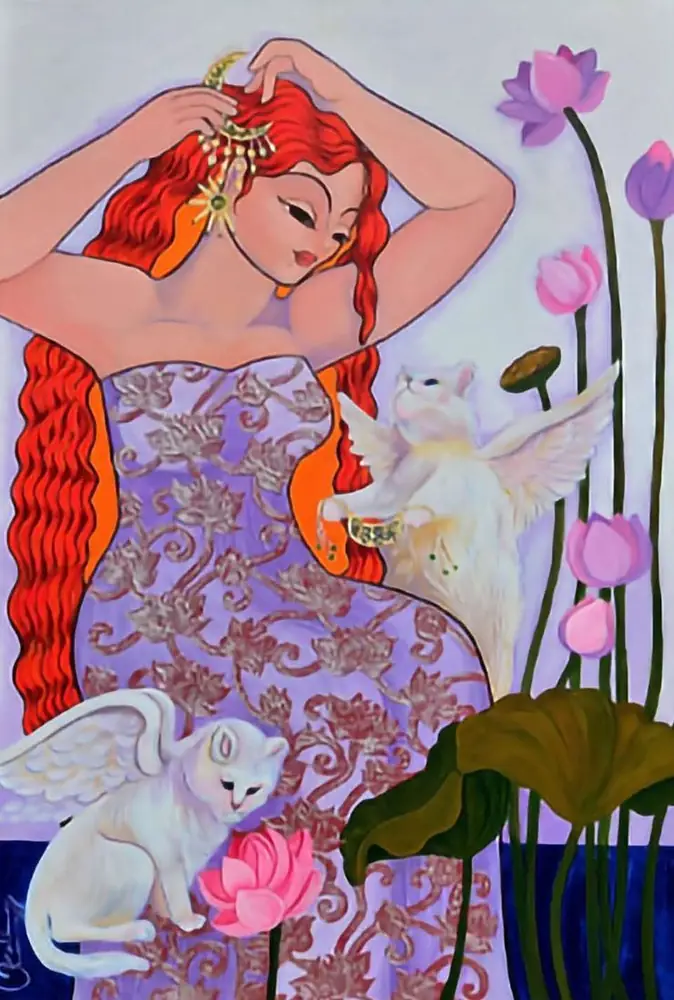
Alka Choudhary answered twice over. Her Noble Lady stands in a lotus garden with her wings open, hummingbirds about her and, rather wonderfully, a pair of blue shoes: a portrait of a self-made woman, and of growth through adversity. Beside her hung Princess Padma, who awaits a prince her poet has described so vividly that she already knows he is the one. Winged cats circle her; a crescent moon crowns her golden hair. In the artist's own lovely phrase, she is not waiting nervously. She is waiting beautifully.
Aswatha took the older reading. Awakening, a commanding oil some four feet by five, returns to the lotus as the scriptures know it: a flower that grows in dark water and yet opens, clean and radiant, above the surface. It is a painting about rising through difficulty, and it has the stillness of something that already has.
Familiar as it is, the lotus proved to have a great deal left to say.
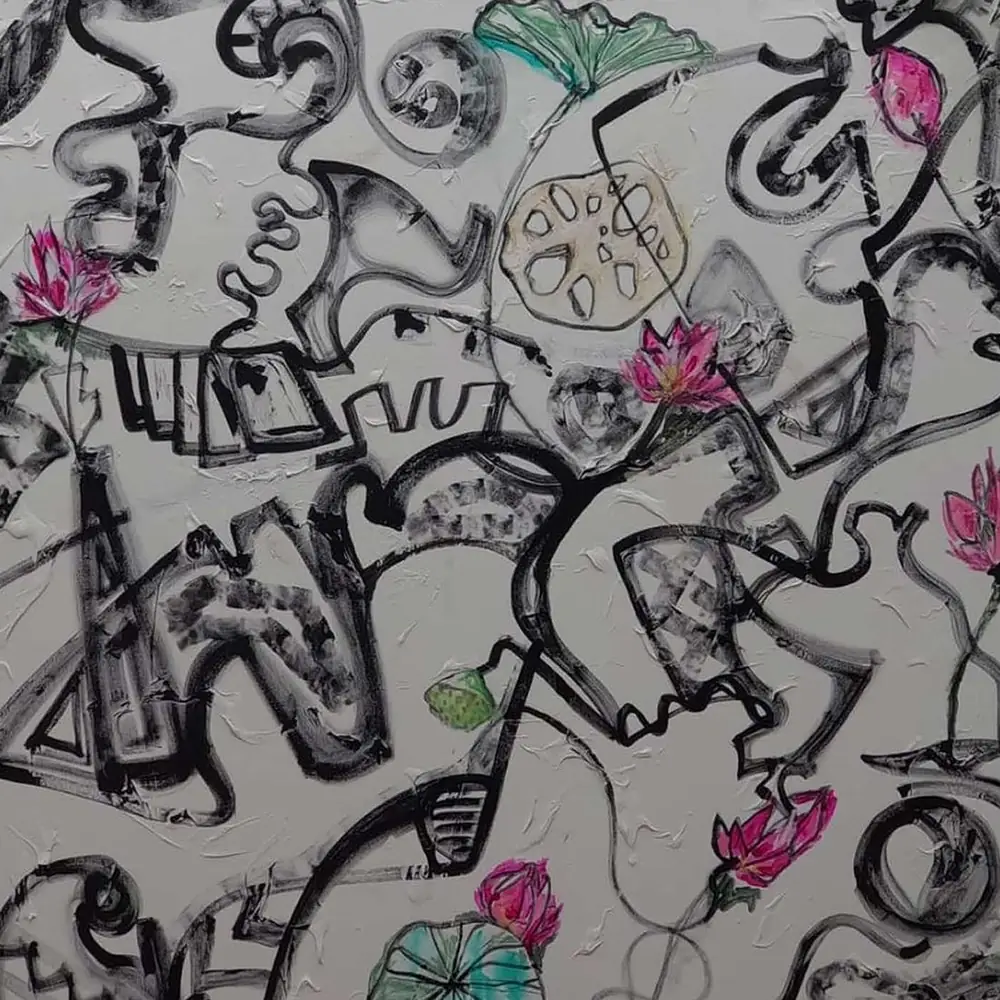
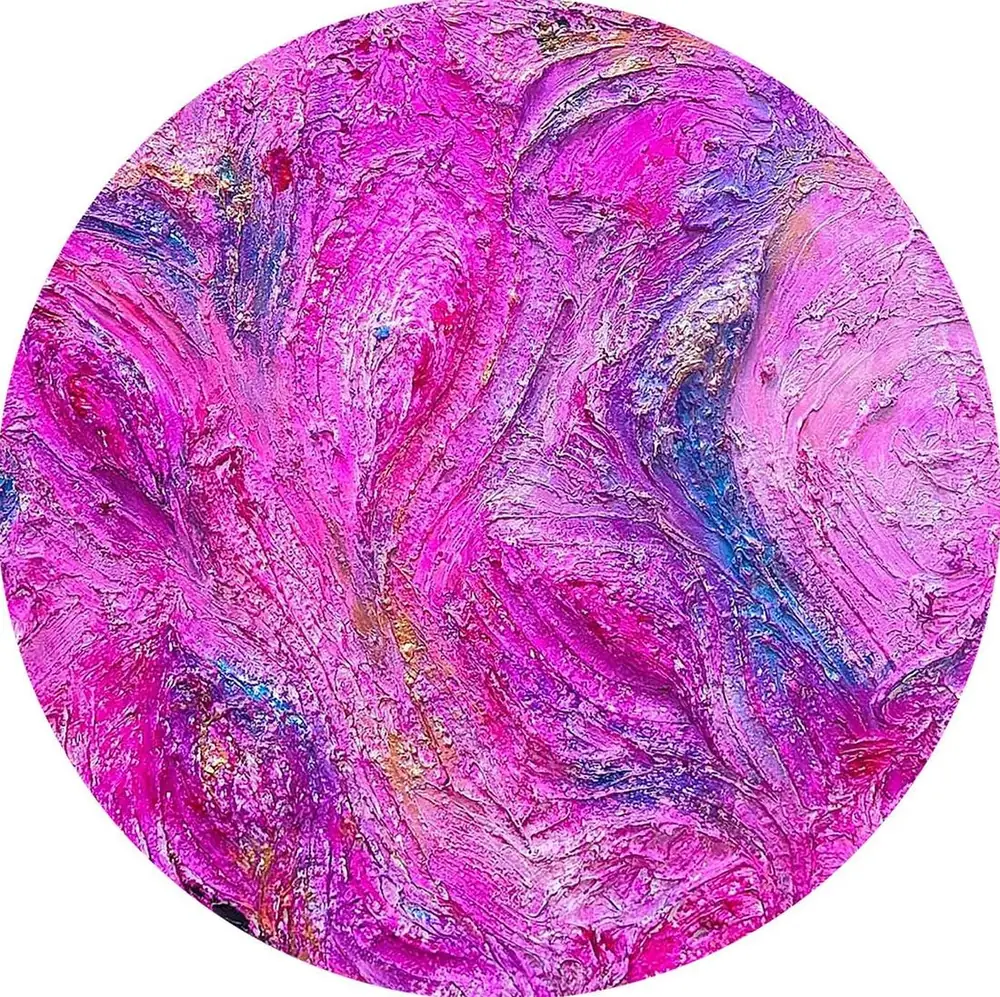
Tanvi Kulshreshtha gave the evening its title in miniature. Padmanubhuti, a round canvas three feet across, means something close to the feeling of the lotus, and that is precisely what it offers: textured buds in shades of lotus pink, touched with gold, less a picture of the flower than of its presence. Her Beauty of Becoming went further, drawing the lotus in black and white, the black lines standing for the mud and the colour for all that rises out of it.
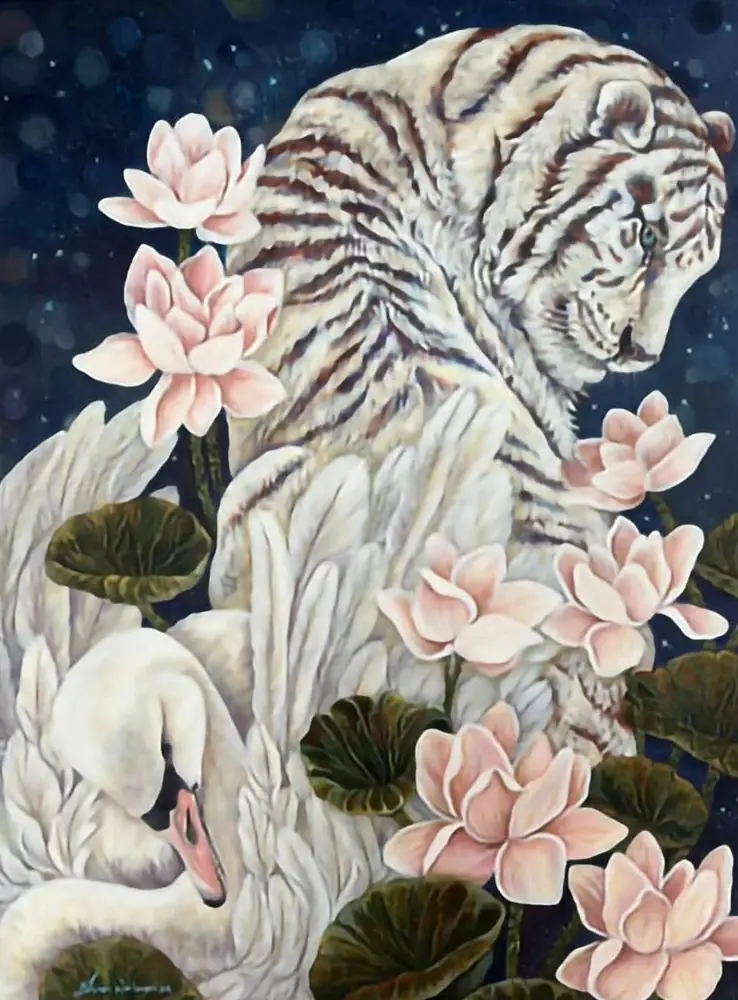
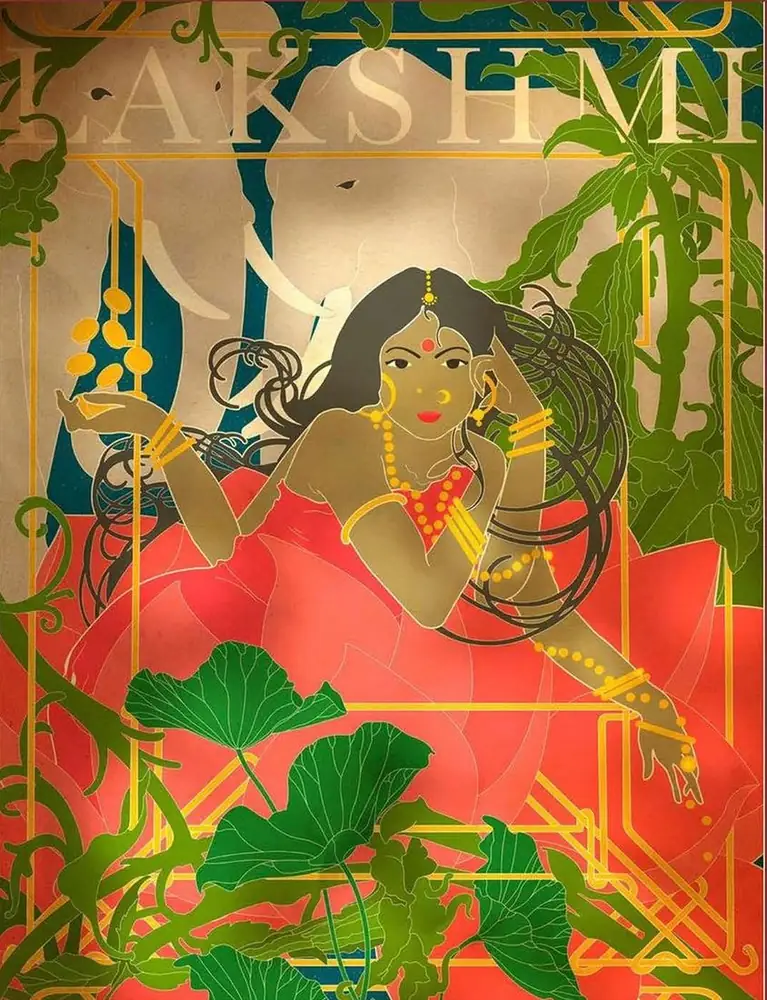
Elsewhere, the lotus kept distinguished company. Shirin Watwani's Tridevi brought together Durga's tiger, Saraswati's swan and Lakshmi's lotus: courage, knowledge and abundance in a single trinity. Sujata Achrekar's Divine Humanity paintings, drawn from the avatars from Matsya to Krishna, asked whether divinity is distant or something a person might hope to understand. Smruthi Gargi Eswar's Lakshmi moved through a cosmos of Asuras and Devas, desired by all and possessed by none.
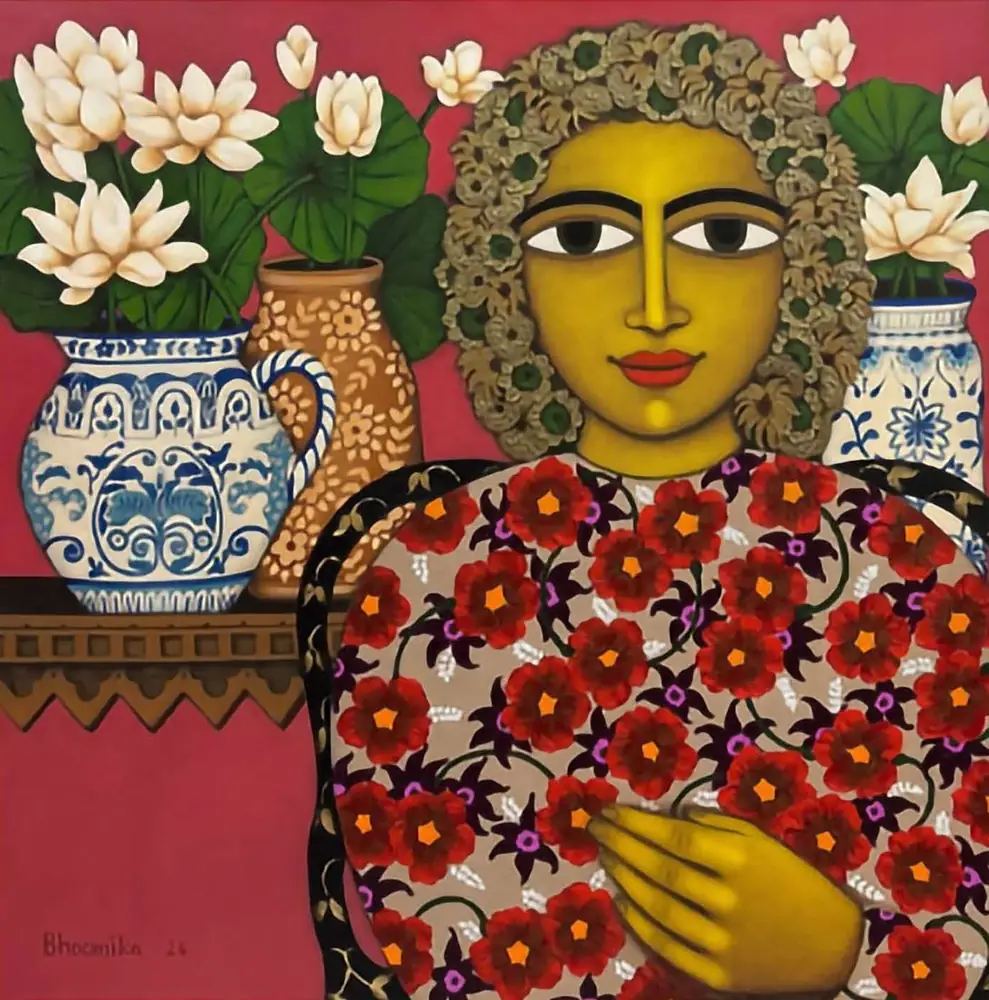
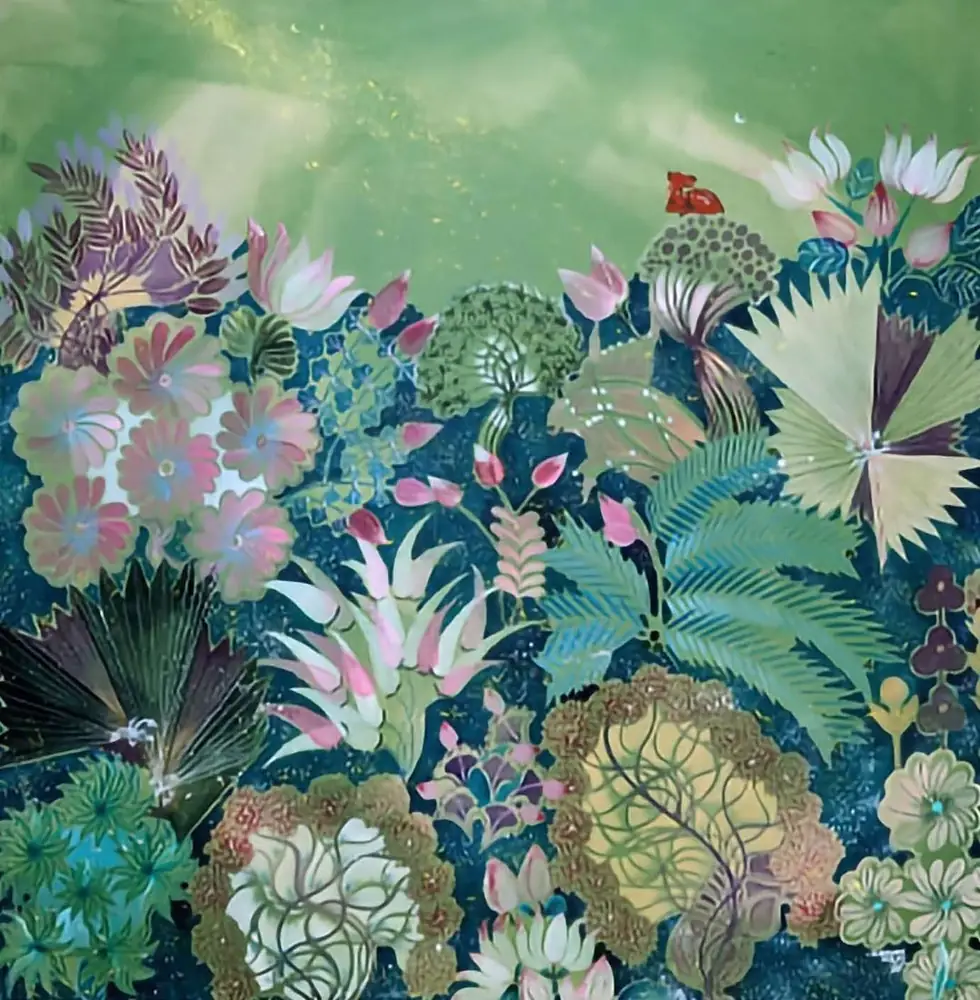
Priyanka Aelay painted imagined ecosystems that might lie beneath the sea or somewhere beyond the sky. Bhoomika Dange seated a woman among blooming lotuses, still and composed. Rani Banerjee's Embraced Within caught a woman in her element, choosing her own pace.
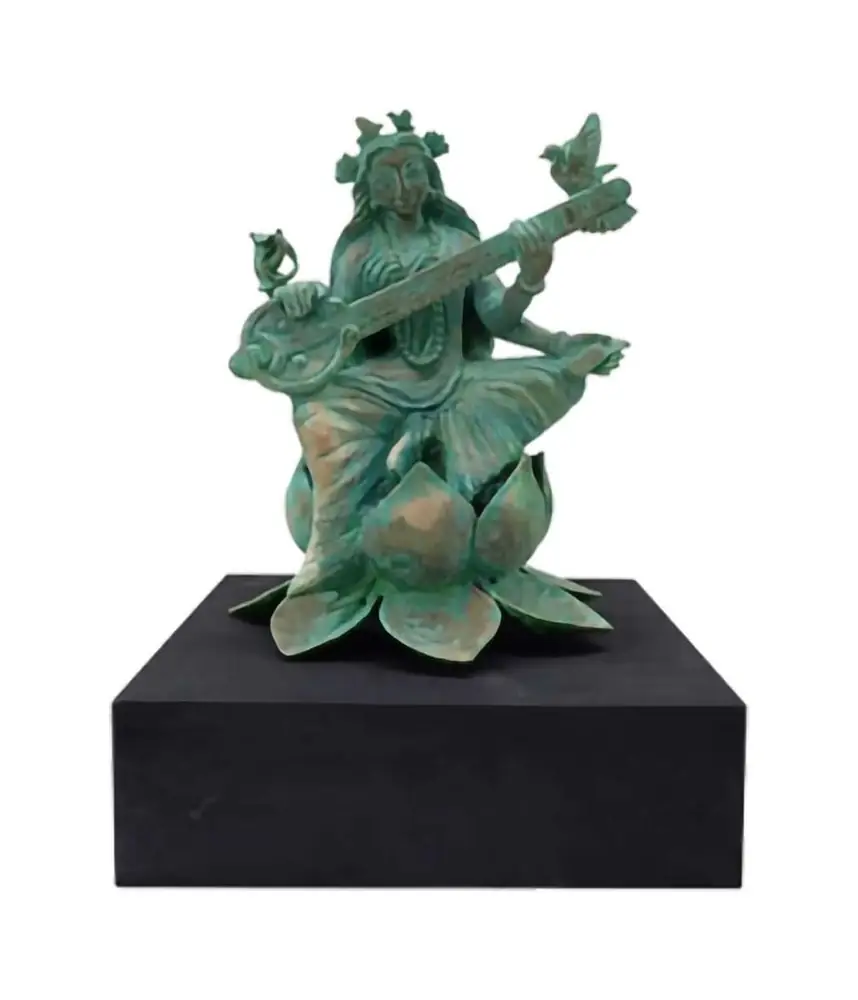
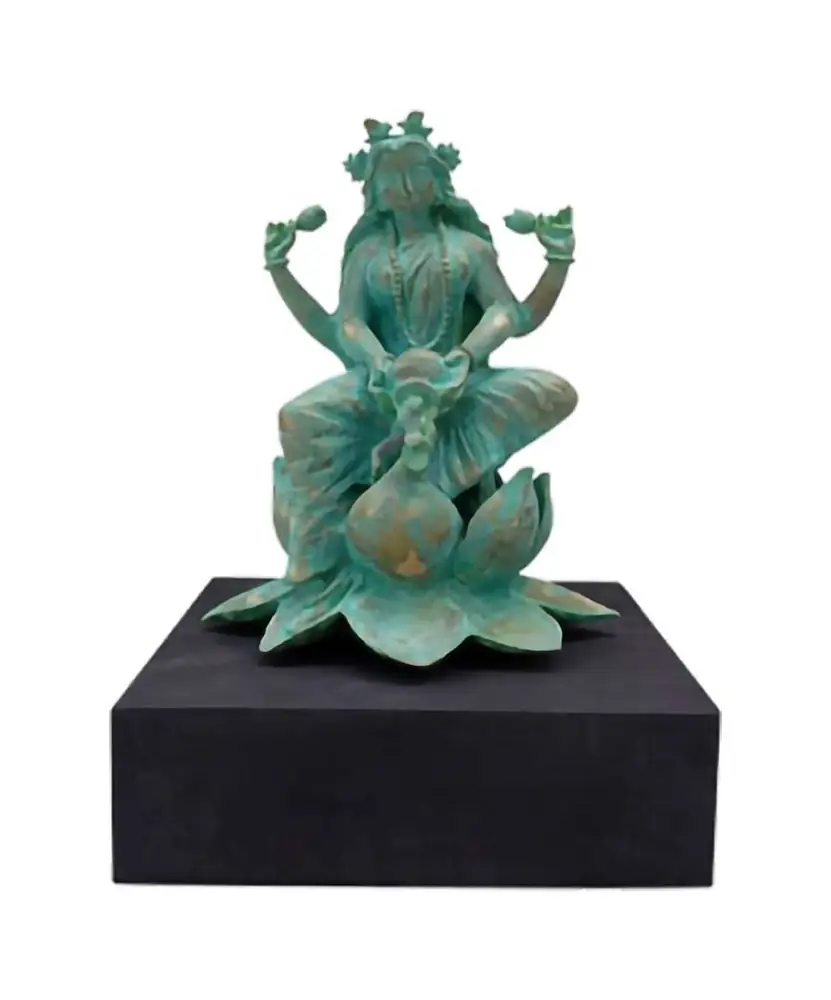
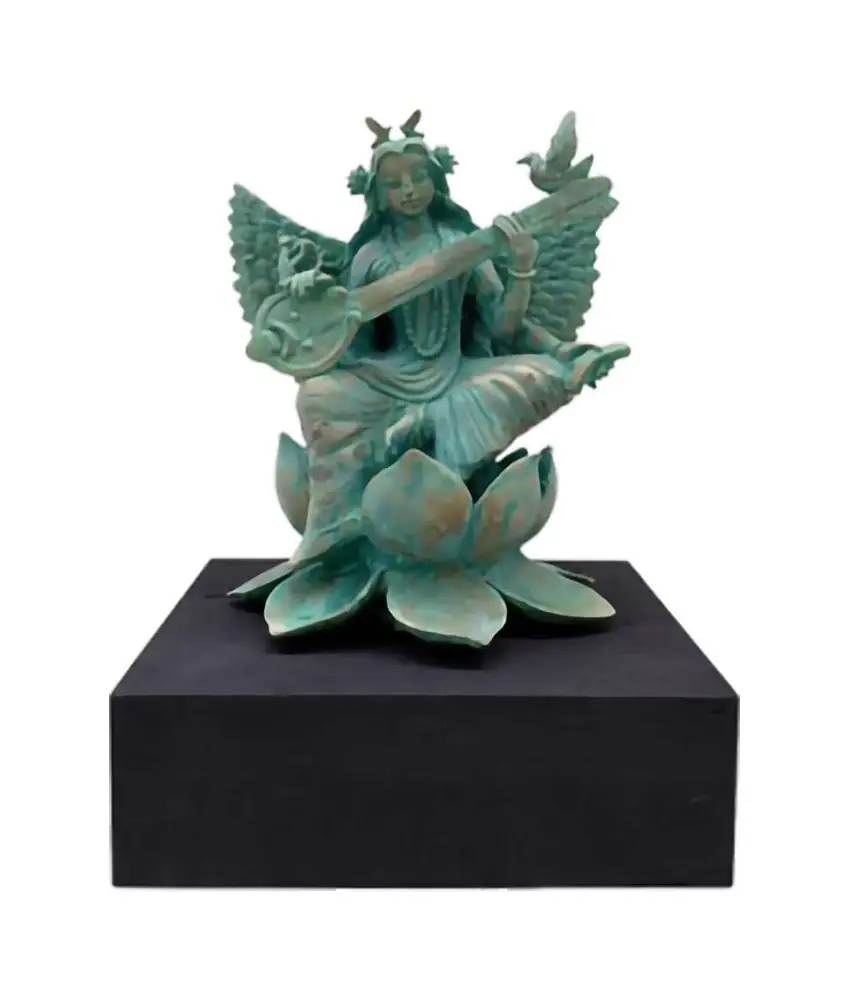
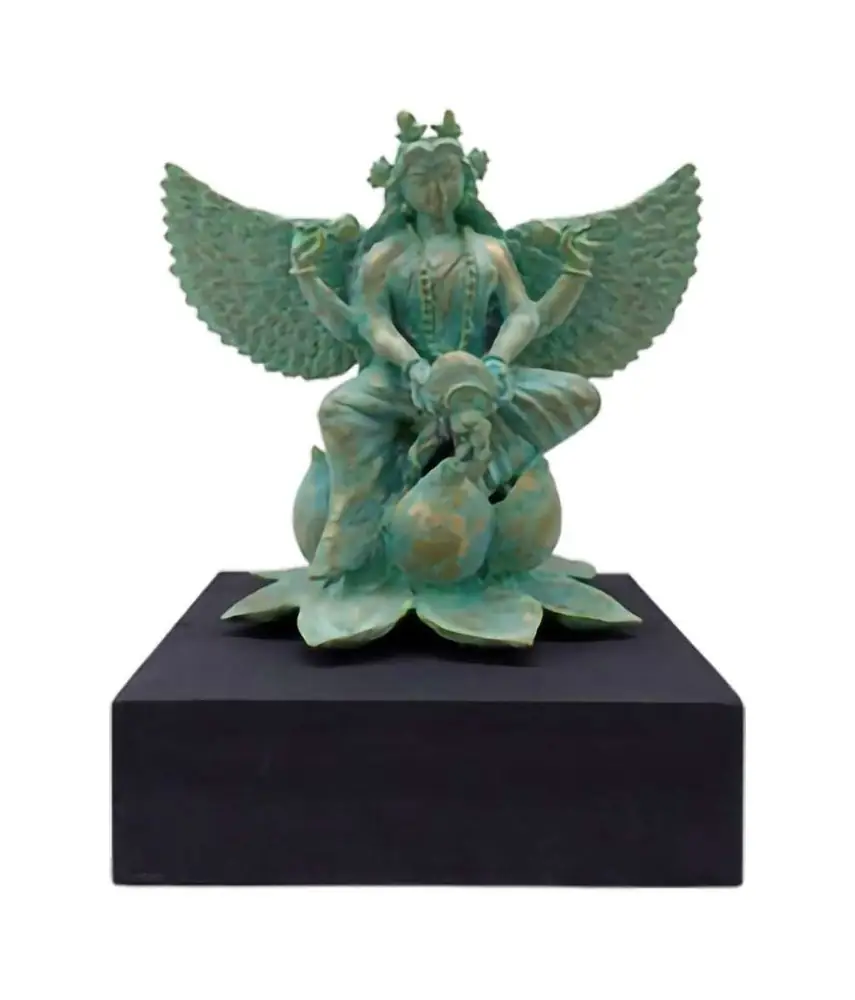
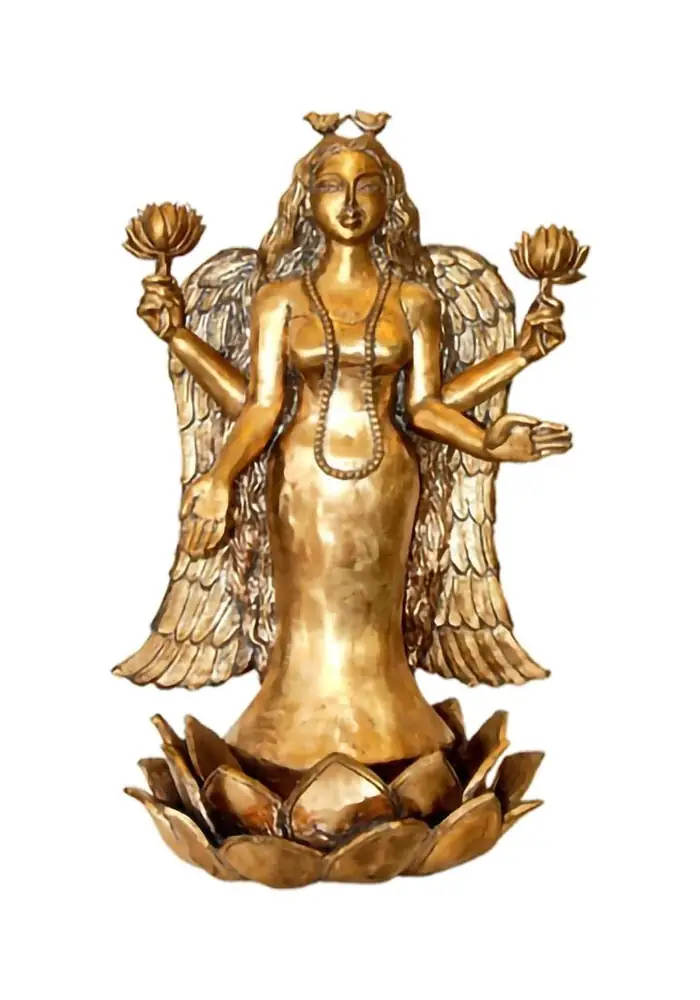
Alka's goddesses held the centre of the room: Shree, Saraswati, and Mahamayuri, a figure a little over two feet tall and weighing more than twenty-six kilograms, which is to say a presence rather than an ornament. Paintings and bronze do not always sit easily together. At Padma they seemed to have been waiting for one another.
What the evening showed, in the end, was that a single, very old form, placed in the hands of nine contemporary artists, can still surprise us. The works from that night now live in the collection, and may be viewed there at leisure.
Growing up among the women of Rajasthan, in all their finery and ornament, gave Alka her signature figure: a lady with imaginary wings.
Some painters travel a long way to find their subject. Alka Choudhary appears to have been born beside hers. She grew up in Rajasthan among women dressed, as a matter of course, in exquisite attire and ornament, and she was captivated early by their grace and grandeur. Painting since her teenage years, she has spent the time since turning that fascination into a figure entirely her own.
Collectors know her as the Dreaming Lady: a woman who radiates power, elegance, vitality and, unapologetically, glamour, and who wears a pair of imaginary wings. The wings are the point. In Alka's telling they stand for freedom of choice.
For Alka, painting unveils the inner beauty every woman carries.
The Noble Lady, painted in acrylic on a canvas of three feet by four, is perhaps the clearest statement of the idea. She is a self-made woman, born of the artist's reflections on strength, resilience and quiet confidence. Every detail carries weight: the red for visibility, the hummingbirds for resilience, the blue shoes for self-arrival, the lotus garden for growth through adversity. Her open wings say the rest: that women are bound by no ceiling at all.
Princess Padma is the same lady in a more romantic mood. Her gown of silver work catches every light; her hair is the gold of a setting sun, crowned with a crescent moon; winged cats keep her company. She waits for a prince her poet has described so vividly that she already knows him. It is a painting with a smile in it, and a rather knowing one.
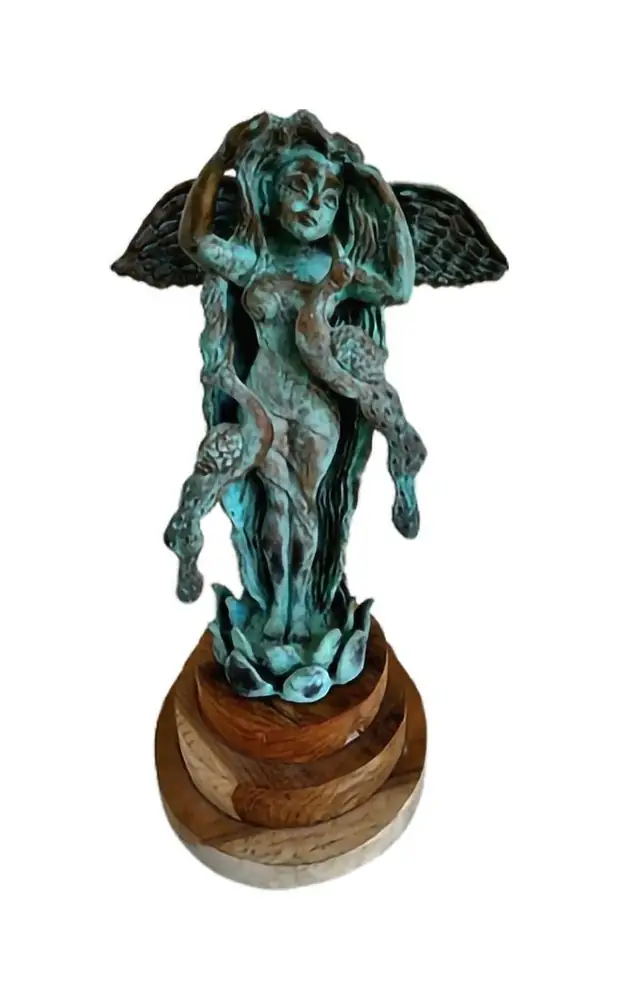
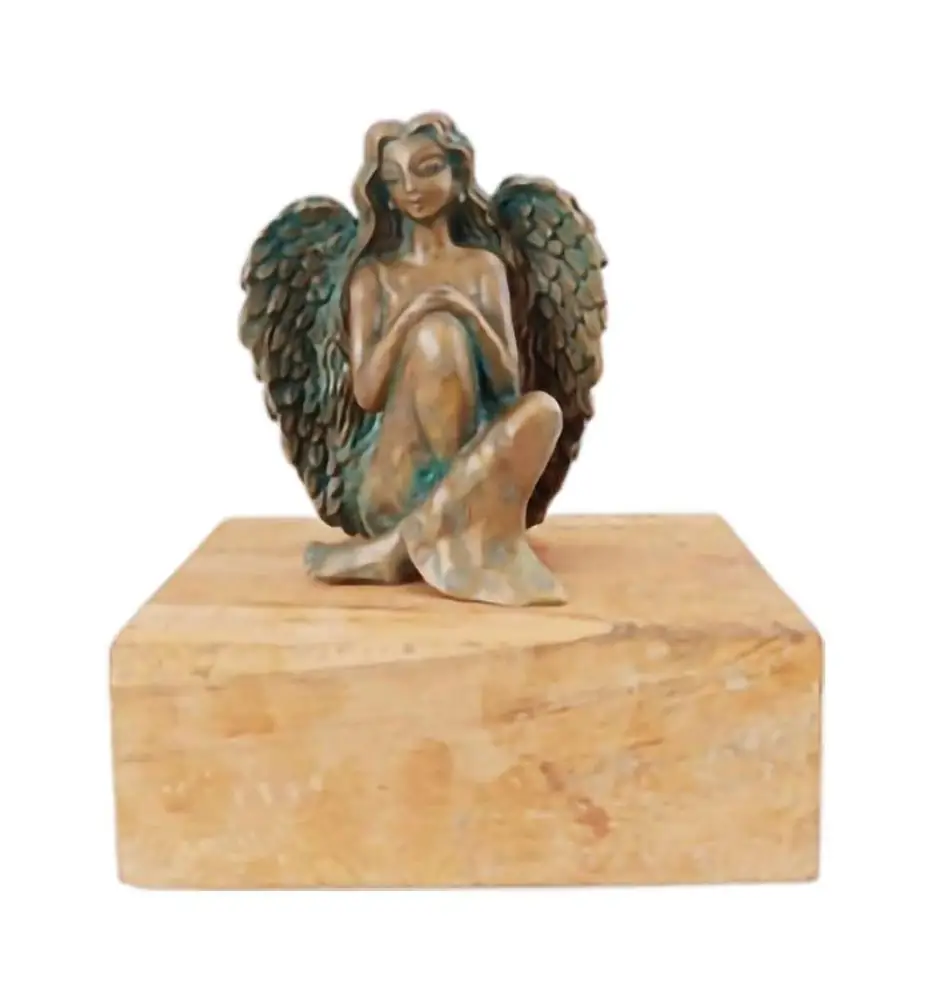
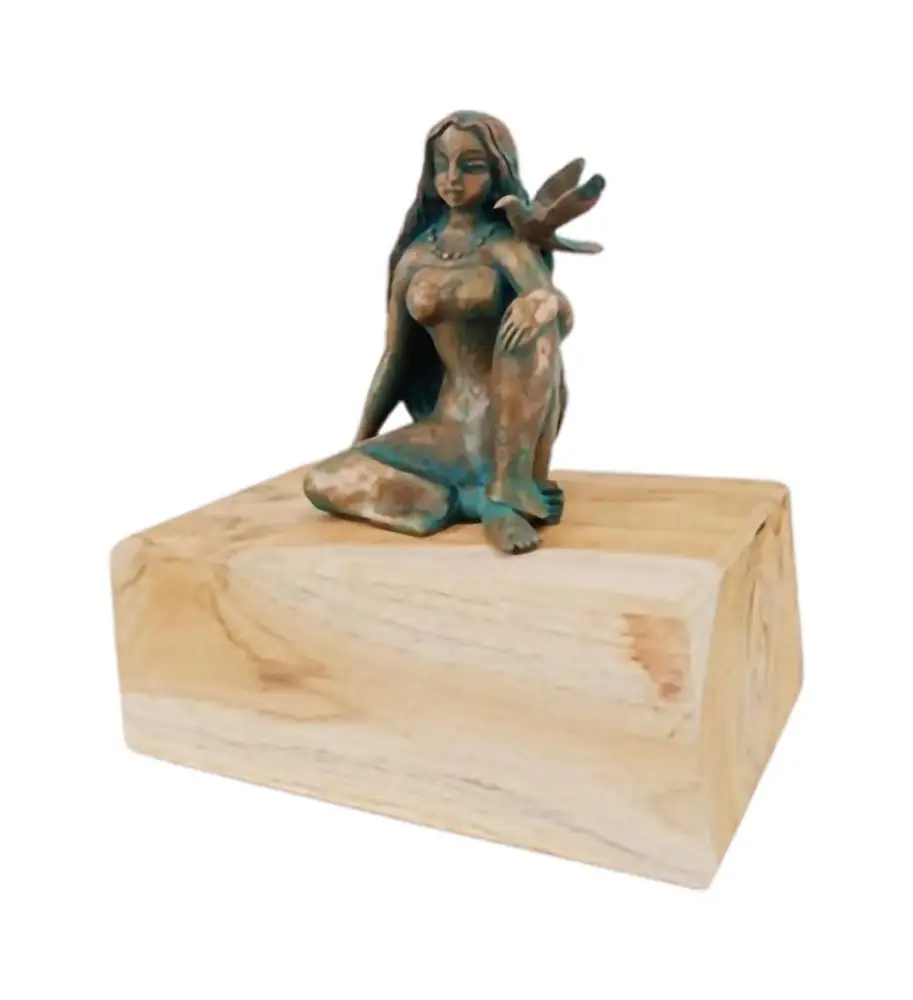
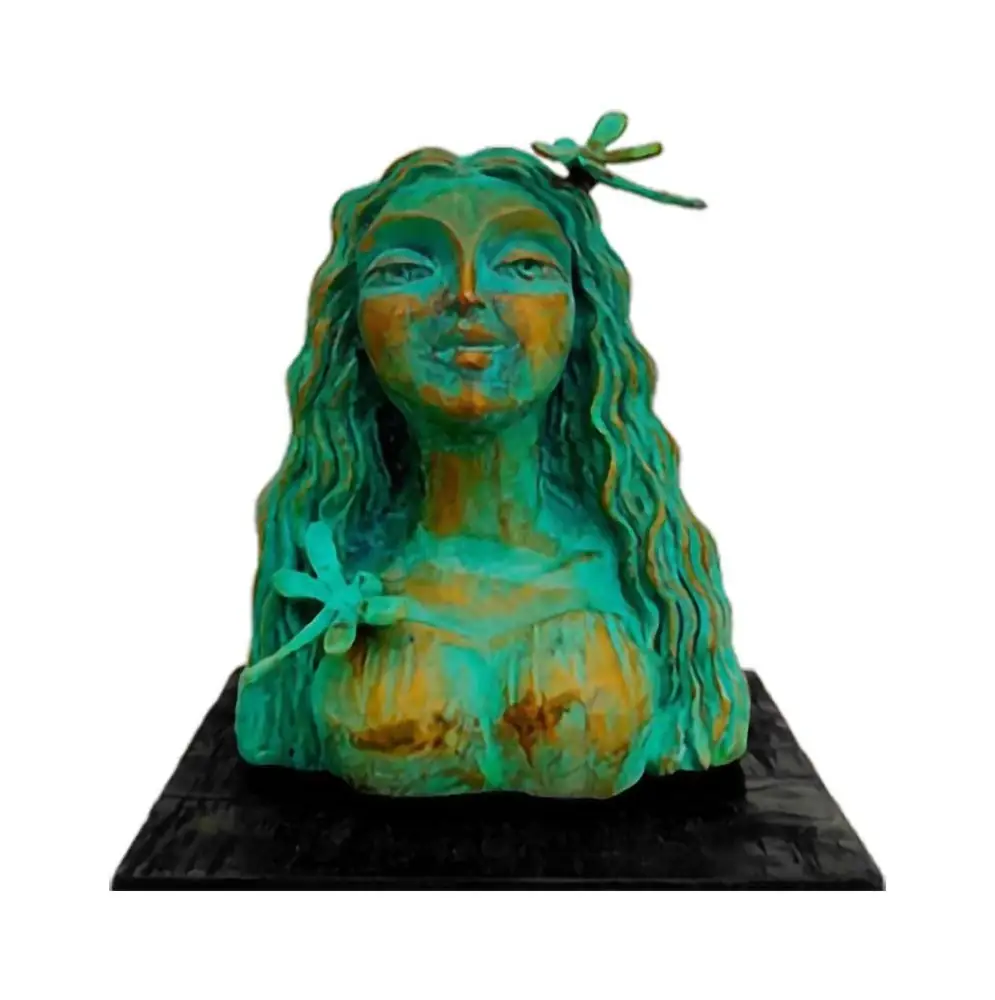
The lady does not stay on the canvas. Alka is a sculptor as well as a painter, and her figures step quite naturally into the round: Shree (Laxmi) with wings carries the signature straight into sculpture, while My Angel and Angel with bird are small enough to hold in two hands, and all the more intimate for it.
Alka believes that art flows through her like a second soul. Spend an afternoon among her ladies and the phrase begins to sound less like a flourish than a plain description. Eleven of her works are presently with Kanam.
On the cast figures first shown at Padma, and why a sculpture rewards a long, unhurried look from every side.
A painting meets you face on. A sculpture asks you to walk around it, and in that small courtesy lies most of its charm.
Bronze has a long and distinguished history in the south of India. The great Chola figures, cast more than a thousand years ago, remain among the most admired objects in any museum fortunate enough to hold one. To live with a bronze, even a thoroughly contemporary one, is to join a very old conversation.
The bronzes by Alka Choudhary in the collection make the point by their sheer bearing. Shree stands nineteen inches tall and weighs twenty-four kilograms; Mahamayuri, at twenty-seven inches, weighs a little over twenty-six. These are pieces with gravity, in every sense, and they ask to be placed accordingly: on a ledge of stone, a sturdy plinth, or a console that can take the weight without complaint.
At the other end of the scale sit Urvashi, Angel with bird and My Angel, each well under a foot tall. Small bronzes are the collector's secret. They reward being seen up close, on a library shelf or a writing desk, where the hand is tempted to reach out.
A painting meets you face on. A sculpture asks you to walk around it.
Bronze is at its finest in raking light: a lamp set low and to one side, or the last of the afternoon falling across a room. Watch the same figure at breakfast and again after dinner, and it will seem to have changed its expression. Given room on every side, it will change again as you pass.
It also improves with keeping. The surface of a bronze deepens slowly over the years, gathering a patina that no workshop can hurry. One is, in a sense, never quite finished acquiring it.
Patience, then, is the whole of the matter: the patience of the maker, the patience of the metal, and the patience of the person who lives with it. It is a rather civilised thing to ask of anyone.
One considered piece, given a wall of its own, can set the whole tone of a room. A few thoughts on choosing it.
The rooms one remembers are seldom the most crowded. They tend, instead, to have one thing in them worth remembering: a painting over a fireplace, a bronze in a stairwell, a canvas that greets you before anyone else does.
There is a quiet confidence in giving a single work a wall of its own. It says the owner chose it, and chose it for good reason. It lets the piece speak at its natural volume. And it spares a room the faintly anxious air of a collection trying to be seen all at once.
It is tempting to begin with the empty wall and go looking for something to fill it. We would suggest the opposite. Begin with a work that moves you, then find the place where it can be seen properly. A square canvas from Sujata Achrekar's Divine Humanity series, with its hypnotic faces, will hold a drawing room without ever raising its voice. Aswatha's Awakening, at four feet by five, will command a double-height hall. Tanvi Kulshreshtha's round Padmanubhuti will soften a room built entirely of straight lines.
Begin with a work that moves you, then find the place where it can be seen properly.
Hang a painting so that its centre sits at roughly eye level, around five feet from the floor, rather than lifted towards the cornice. Above a sofa or a console, let the work span something near two thirds of the furniture's width. Keep canvases out of strong direct sun, and light them warmly. Leave generous space around the piece; the wall is part of the frame.
Then live with it for a season. See it in the morning, at dusk, with guests and without. A good piece reveals itself slowly, and the pleasure of that is very much the point.
Kanam's collection turns each season, which is rather the idea. The room may change around you. The piece you choose, you keep.
Trained in Baroda and Bangalore, Smruthi paints the older, quieter tales that sit between the well-known ones, in a language entirely her own.
Every family has its well-worn stories, told so often that everyone knows the ending. And every family has the other kind: the tale a grandmother told only once, half-remembered, never quite written down. Smruthi Gargi Eswar paints the second kind.
A painter, graphic artist and storyteller based in Bangalore, she trained at the Faculty of Fine Arts of the Maharaja Sayajirao University of Baroda and at Chitrakala Parishath. Her work has been shown internationally, in Berlin and New York among other cities, and across India. Her particular gift is to revive hidden and forgotten mythologies, and to do so in a thoroughly contemporary visual language.
Her Lakshmi is a case in point. In a cosmos of Asuras and Devas, the goddess of fortune moves freely, desired by all and possessed by none, reminding gods and mortals alike how fleeting fortune can be, until at last she finds her balance beside Vishnu, who alone understands her true nature.
Lakshmi moves freely, desired by all and possessed by none.
It is hard to think of a more elegant image for Kanam itself: a moment, beautifully held, and then allowed to move on.
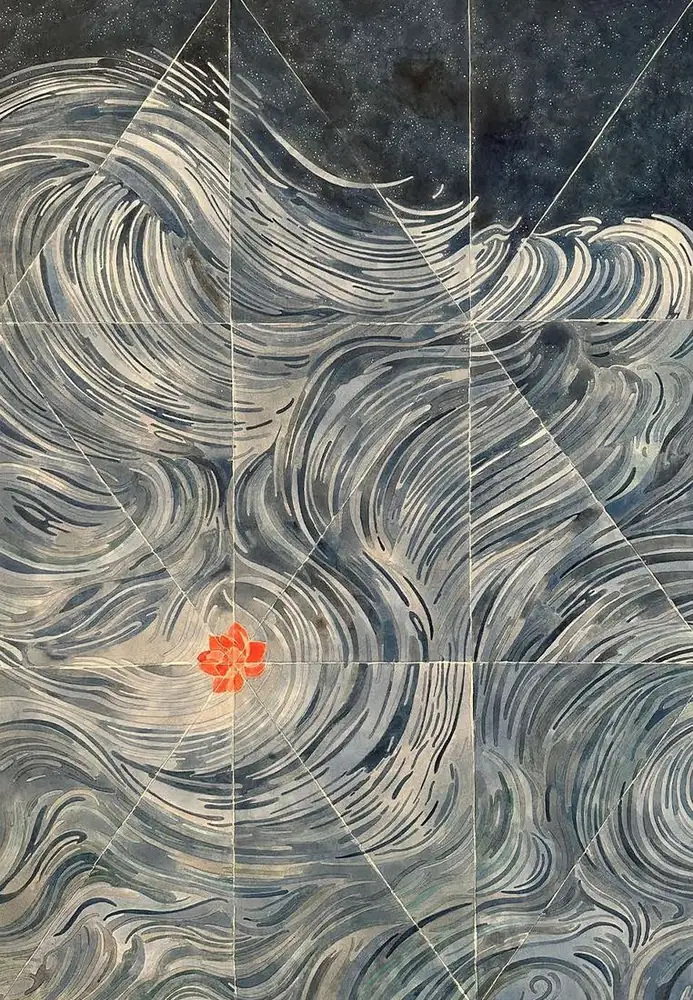
Her untitled oil in the collection goes further inward. It speaks of a memory of the mind and a memory of the body: oceans, winds, an eternal flame, and the soil that makes us. At its heart is a lotus, standing for our place in a greater unfolding that began long before any of us, with each of us, somehow, at its centre.
Smruthi's paintings ask to be read slowly, as the best stories always have. They repay the attention handsomely.
Studio visits, long conversations, and a great deal of looking, all before a single piece appears on Kanam.
People sometimes ask how a work finds its way onto Kanam. The honest answer is: slowly, and by hand.
Every piece in the collection is chosen by Rajani herself. That is a simple sentence with a great deal of looking behind it. Before anything is shown, there is the work to be seen in person wherever possible, the artist to be met, and a long conversation about where the work comes from and where it might go.
Kanam thinks of itself as a collective before a collection. An artist who joins is welcomed personally, introduced by name, and credited properly wherever their work appears. Their story is told in their own terms, with the particulars that matter: the city they paint in, the materials they favour, the ideas they keep returning to.
Every piece in the collection is chosen by Rajani herself.
Once a work is chosen, it is photographed with care, measured exactly and described plainly, so that a collector in Chennai, London or New York can understand it as well as one standing in front of it. Many works then have their first evening at one of Kanam's gatherings, where artists, collectors and other disciplines share a room and the conversation is allowed to run long.
And because the collection turns with each season, no artist is ever simply filed away. Their work is shown, and seen, and then makes room for the next moment.
Artists who would like to be considered are most welcome to write to us at artists@kanam.world.
Kanam began with a small, abiding belief: that finding a piece of art you love ought to feel like an occasion.
Kanam is an art collective and a rotating gallery: a calm and candid room whose walls change with the seasons. Each piece is here because it moved us, and each is shown simply, with the work given room to breathe.
Prices are shared openly, on request, in plain language. Artists are credited by name and given room to be seen. Come with intent, and leave with something that stays with you. That, really, is the whole of it.
In Tamil, kanam means a moment: a single instant in time, complete in itself.
So it is with the work. Each season the collection turns, fresh narratives arrive, and artists from different disciplines share the same room. Everything is here fully, in the present, before the room changes once again. What you take home, of course, is yours to keep.
Provenance, in writing. Every piece leaves with a signed Certificate of Authenticity, and its record is kept, so the story of the work travels with it.
Artists first. Everyone we show is credited by name and given room to be seen. We should like every artist to feel proud to be on Kanam, and that visibility is very much part of what we offer.
Always in motion. The collection turns every season, with fresh narratives, shifting perspectives and collaborations across disciplines.
Restraint, always. The setting stays quiet so the art may speak. Done well, you will scarcely notice the room at all.
Kanam is founded and curated by Rajani Sashikanth, who chooses each piece herself and works directly with the artists behind it.
Space styling and art consulting sit with Space Scape, her sister practice, leaving Kanam free to attend to the one thing it exists for: the work, and the people who make it.
Here for a moment.
Kept for a lifetime.
Whether you are considering a piece, furnishing a project, or an artist hoping to be seen, we should be delighted to hear from you.
Tell us a little of what you have in mind, and we shall send the current catalogue, with prices, dimensions and availability.
Rajani replies personally, usually within the day.
Chennai, India · shipping worldwide
Shared on request
Offered via Space Scape
Every piece on Kanam is acquired by conversation, with Rajani, rather than at a checkout.
It feels less like buying art than being asked to look after it for a while.A. KrishnanCollector · Chennai
The first room that has understood how I work. Rajani is patient with the painting itself.An artist on KanamArtist · Chennai
I came for an evening and spent an hour with one brass lamp. It has stayed with me ever since.M. NarayananArchitect · Bangalore
The price came in the first reply, with the provenance beside it. That is rare enough to be worth saying.P. SenguptaCollector · Kolkata
Jaipur, India
Alka Choudhary is a Jaipur-based contemporary figurative artist who believes life is all about happiness. Painting since her teenage years, she draws deeply on Rajasthan's culture and heritage. Growing up among women adorned in exquisite attire and ornament, she was captivated by their grace and grandeur, and from that came her signature Dreaming Lady: a woman radiating power, elegance, vitality and glamour, with imaginary wings for freedom of choice. For Alka, painting unveils the inner beauty every woman carries. Art, she believes, flows through her like a second soul.
Chennai, India
Aswatha is the name under which Chennai-based artist Anjali Rajkumar signs her work, a name connected to her spiritual pursuits. Her practice explores the meeting point of spirituality and science, and her recent works combine oil and acrylic in a style shaped by a varied life.
Goa, India
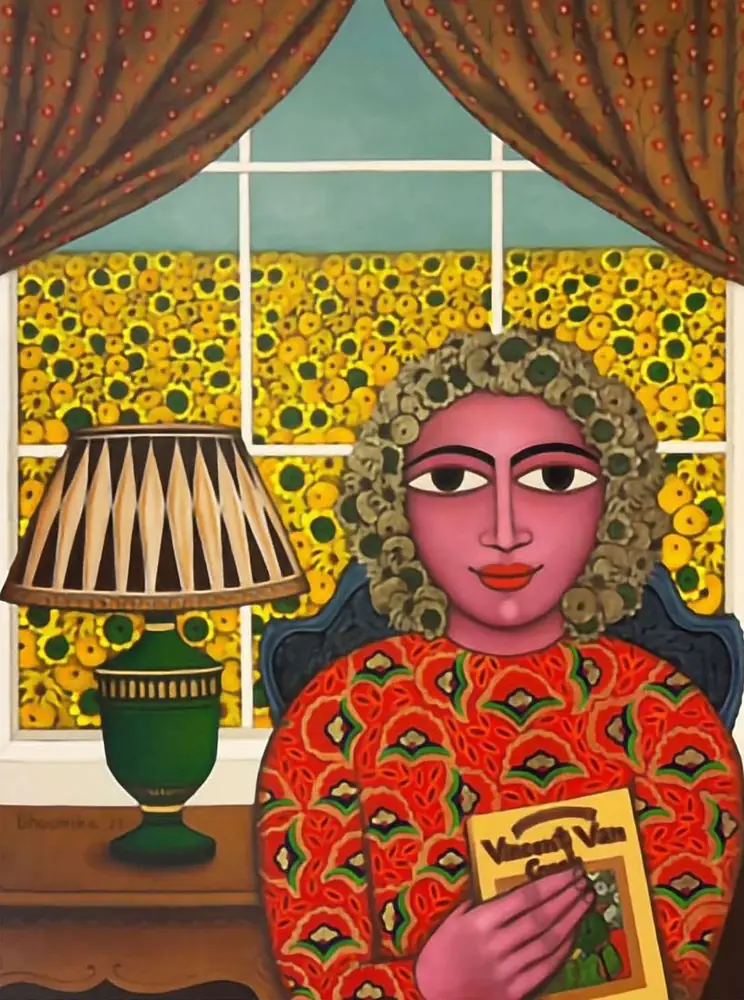
Bhoomika Dange draws on masters such as Vincent van Gogh and Pablo Picasso, weaving their influence into newspaper-based works in which the newsprint becomes a living texture on the canvas. Sunflowers, for love, positivity and happiness, recur throughout. Her paintings often celebrate women, friendship and the quiet bond between sisters, rendered in rich texture and colour. A move to Goa deepened her love of antiques, and she paints nature, quiet moments and layered detail.
Hyderabad, India
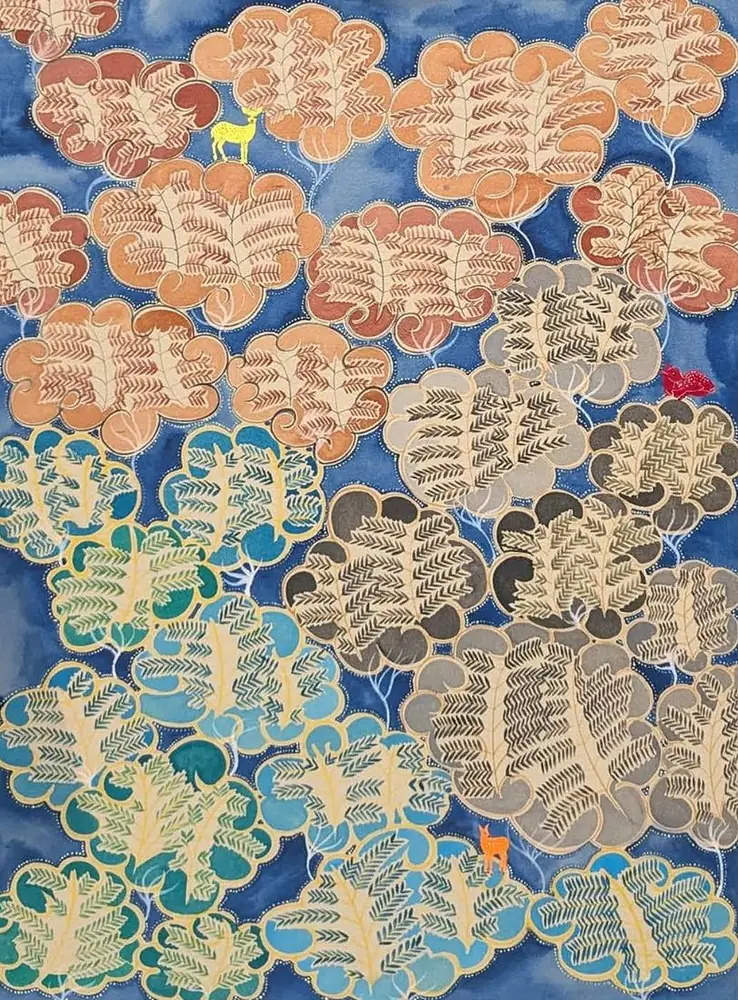
Priyanka Aelay's work draws deeply from nature, folklore and mythology. Using forests, flora and fauna as her visual language, she creates dreamlike narratives that blend fable with reality. Influenced by Telugu folk tales such as Baalanagamma, as well as cinema and visual culture studies, her paintings explore femininity, moon cycles and coexistence across natural landscapes.
Bangalore, India
Rani Banerjee is a modern cubist and non-traditional portrait artist based in Bangalore. Her work explores emotion, abstraction and complexity, bringing personal experience and observation to life through expressive visual storytelling. Raw and emotionally driven, her style celebrates vulnerability, individuality and the strength of modern women.
Chennai, India
Shirin Watwani paints the natural world closest to her heart. Through close observation and a skilled hand, she brings alive not only the beauty of leaves, flowers and creatures but the small particulars that make each thorn, each whisker and each feather feel vibrant and alive.
Bangalore, India
Smruthi Gargi Eswar is a painter, graphic artist and storyteller based in Bangalore. Trained at the Faculty of Fine Arts, Maharaja Sayajirao University of Baroda, and at Chitrakala Parishath, she revives hidden and forgotten mythologies through a contemporary visual language. Her work has been exhibited internationally, including in Berlin and New York, and across major Indian cities.
Mumbai, India
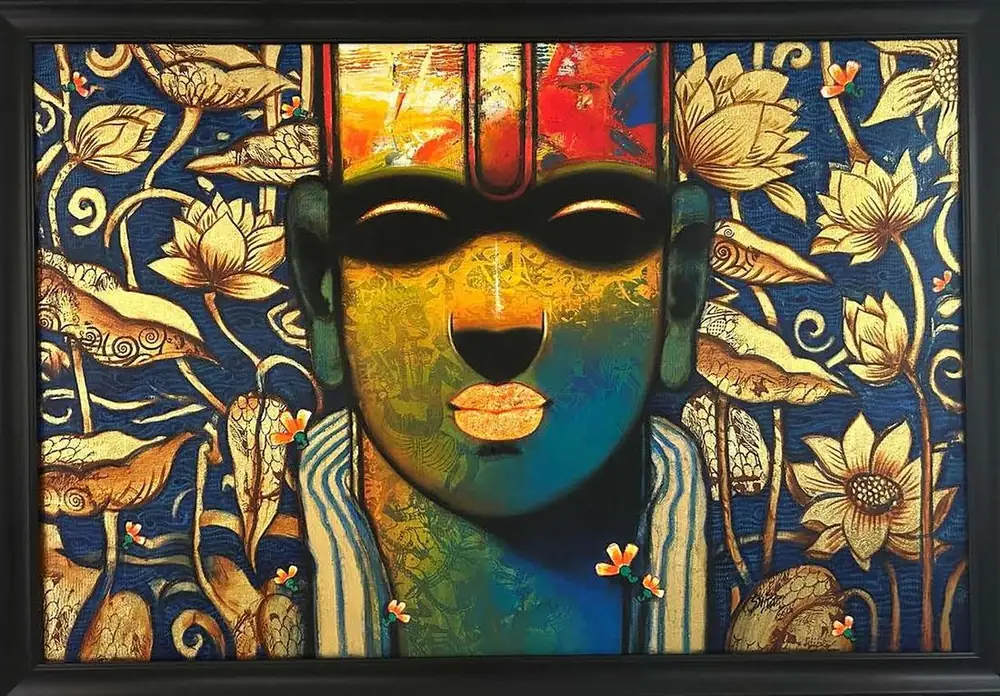
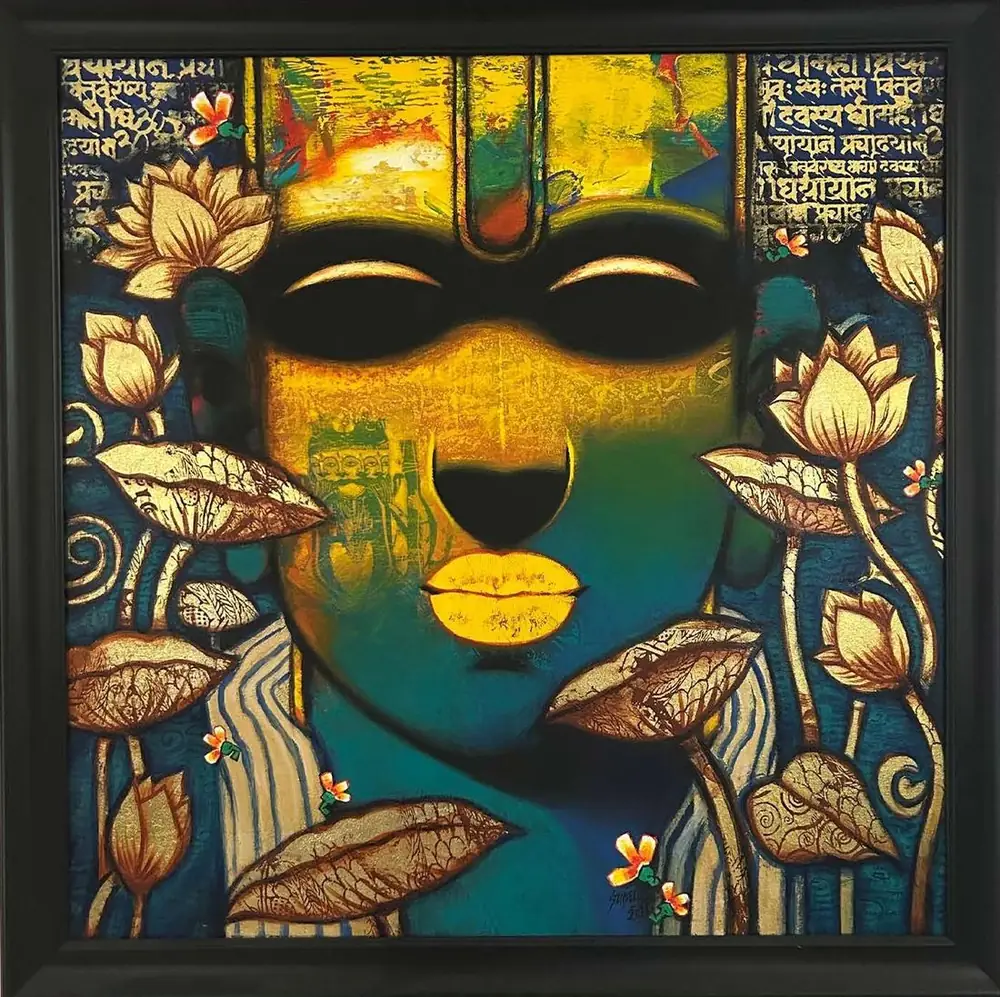
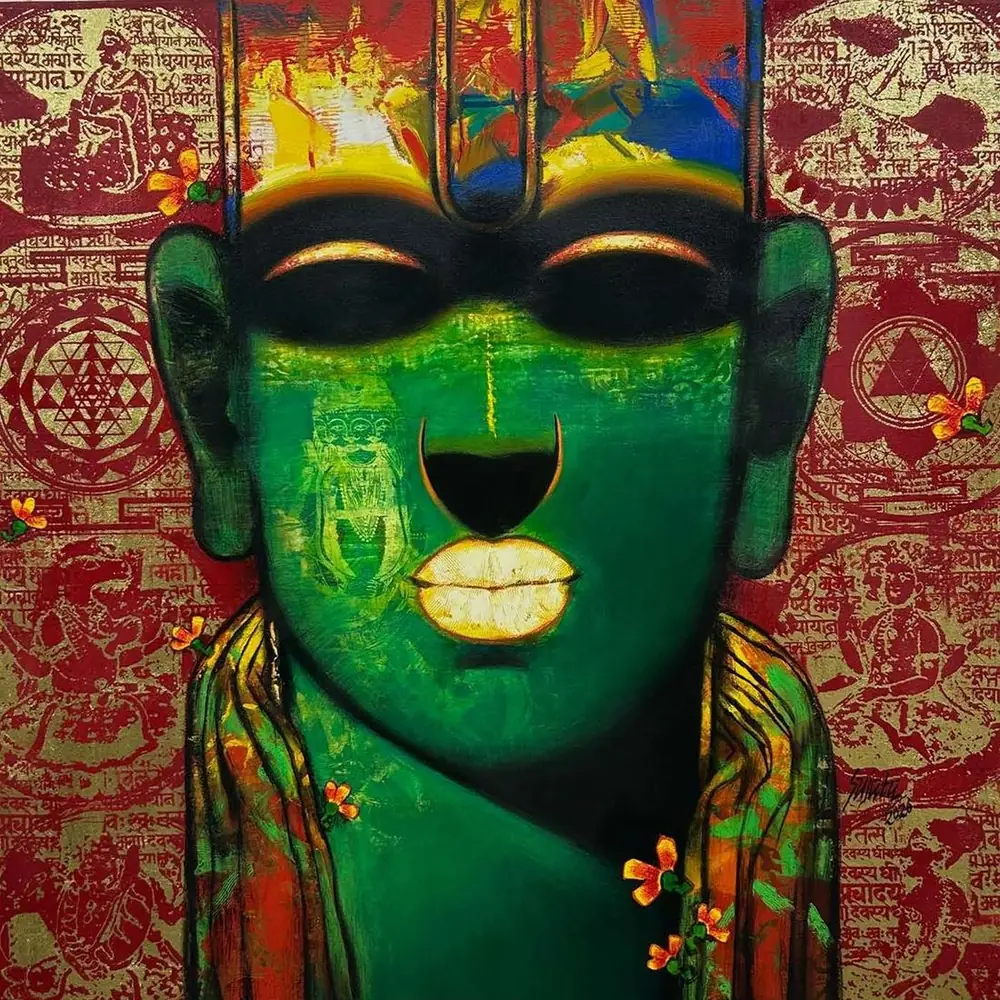
Sujata Achrekar is a Mumbai-based artist known for evocative figurative paintings marked by hypnotic faces and rich earthy tones. Working primarily in oils, she blends figurative and abstract elements to create meditative, introspective works. She is especially known for her Brahmin Brahmachari series, in which spiritual seeking and layered texture play a central role.
Pune, India
Tanvi Kulshreshtha creates vibrant mixed-media works full of colour, texture and energy. Drawing on places such as Rajasthan, Bangalore and Pune, her paintings blend abstract imagery, pattern and luminous fields of colour, combining organic and architectural forms into uplifting works that bring rhythm, movement and joy to the viewer.
Figurative painting in acrylic on linen canvas.
Two large-format paintings, each 48 × 48 in.
Figurative painting in acrylic, pen and ink on canvas.
Figurative painting in acrylic on linen canvas.
Figurative painting in mixed media on canvas.
Click to enlargeA portrait of a self-made woman, born from the artist's reflections on strength, resilience and quiet confidence. Red, lotus flowers, hummingbirds and blue shoes stand for visibility, resilience, natural authority and self-arrival; the lotus garden for growth through adversity. Her open wings carry the central message: that women are not bound by limits or ceilings.
Every letter is read by Rajani. She replies with the price, the provenance, and an honest view of whether it suits the room you have in mind.
Click to enlargePrincess Padma prepares to meet the prince her poet has described so vividly that she already knows he is the one. Winged cats circle her; her gown of silver work catches every light; her hair is gold as the last light of a setting sun, crowned with a crescent moon. She is not waiting nervously. She is waiting beautifully.
Every letter is read by Rajani. She replies with the price, the provenance, and an honest view of whether it suits the room you have in mind.
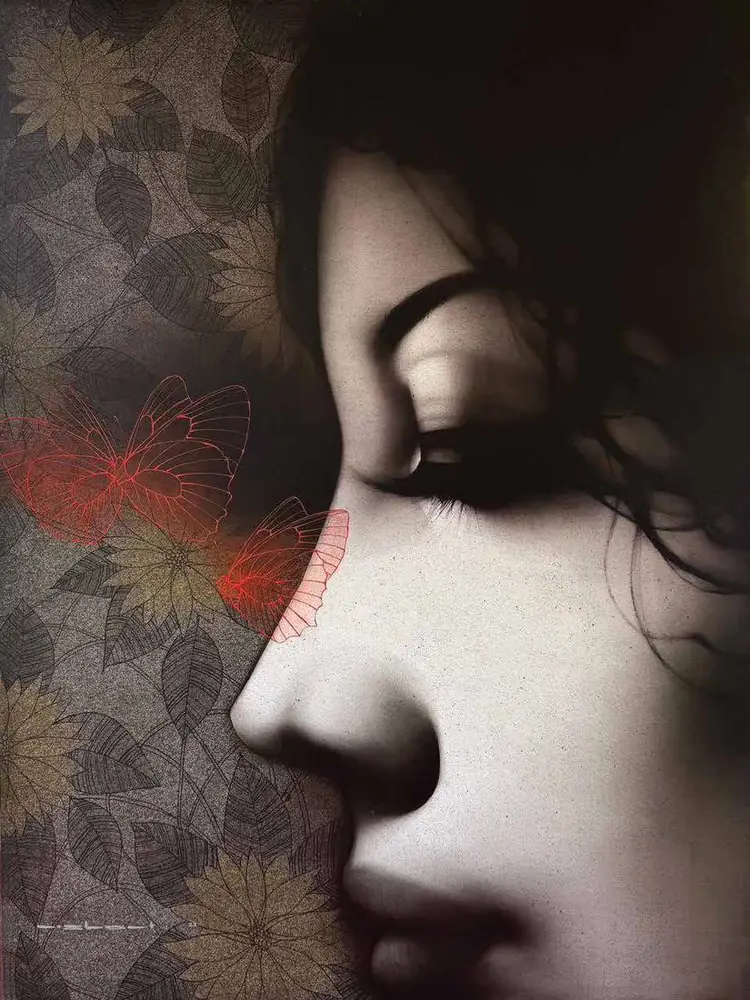
Click to enlargeA reflection on relationships through the inverse curve (1/x): two forces connected yet never fully meeting. It suggests that true balance comes not from chasing completion but from an inner wholeness, where action is rooted in presence rather than attachment.
Every letter is read by Rajani. She replies with the price, the provenance, and an honest view of whether it suits the room you have in mind.
Click to enlargeThe convergence between what one is willing to surrender and what remains essential. In the balance between flow and stillness, choice becomes quiet, honest and true: a place where nothing is performed or pursued.
Every letter is read by Rajani. She replies with the price, the provenance, and an honest view of whether it suits the room you have in mind.
Click to enlargeThe lotus grows in dark water yet opens clean and radiant above the surface: spiritual growth comes not from avoiding difficulty but from rising through it. The struggles around us become the soil from which awareness, compassion and strength emerge.
Every letter is read by Rajani. She replies with the price, the provenance, and an honest view of whether it suits the room you have in mind.
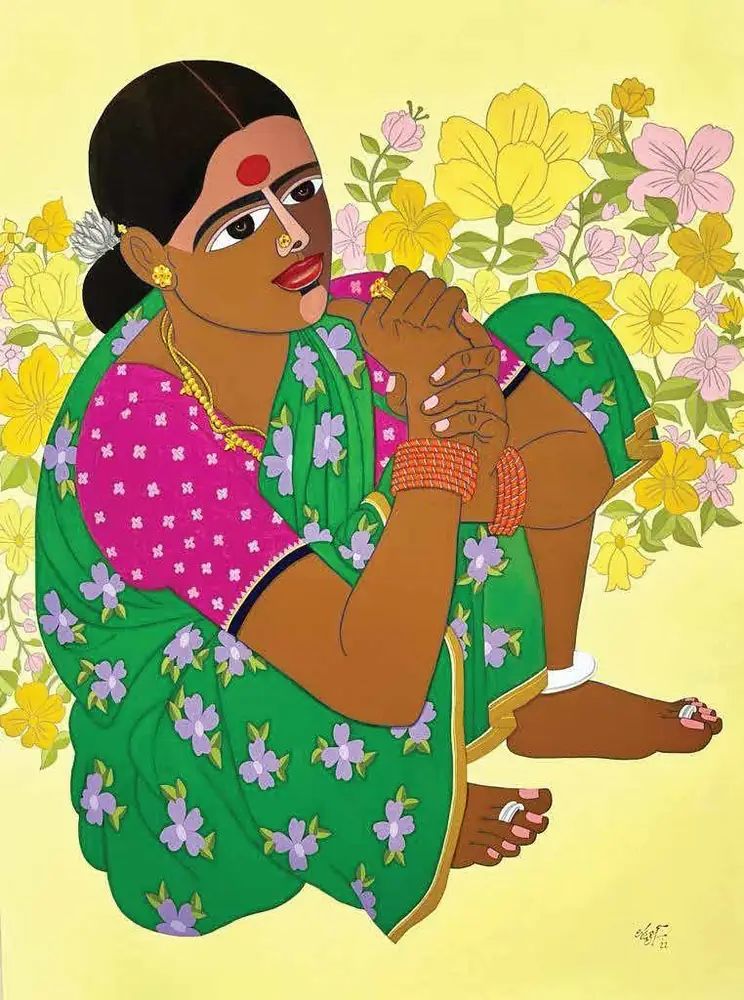
Click to enlargeShe sits among blooming lotuses and intricate pattern that echo her inner world: still and composed, with quiet strength, grace and resilience within. Like the lotus, rooted, pure and rising gently while remaining deeply grounded.
Every letter is read by Rajani. She replies with the price, the provenance, and an honest view of whether it suits the room you have in mind.
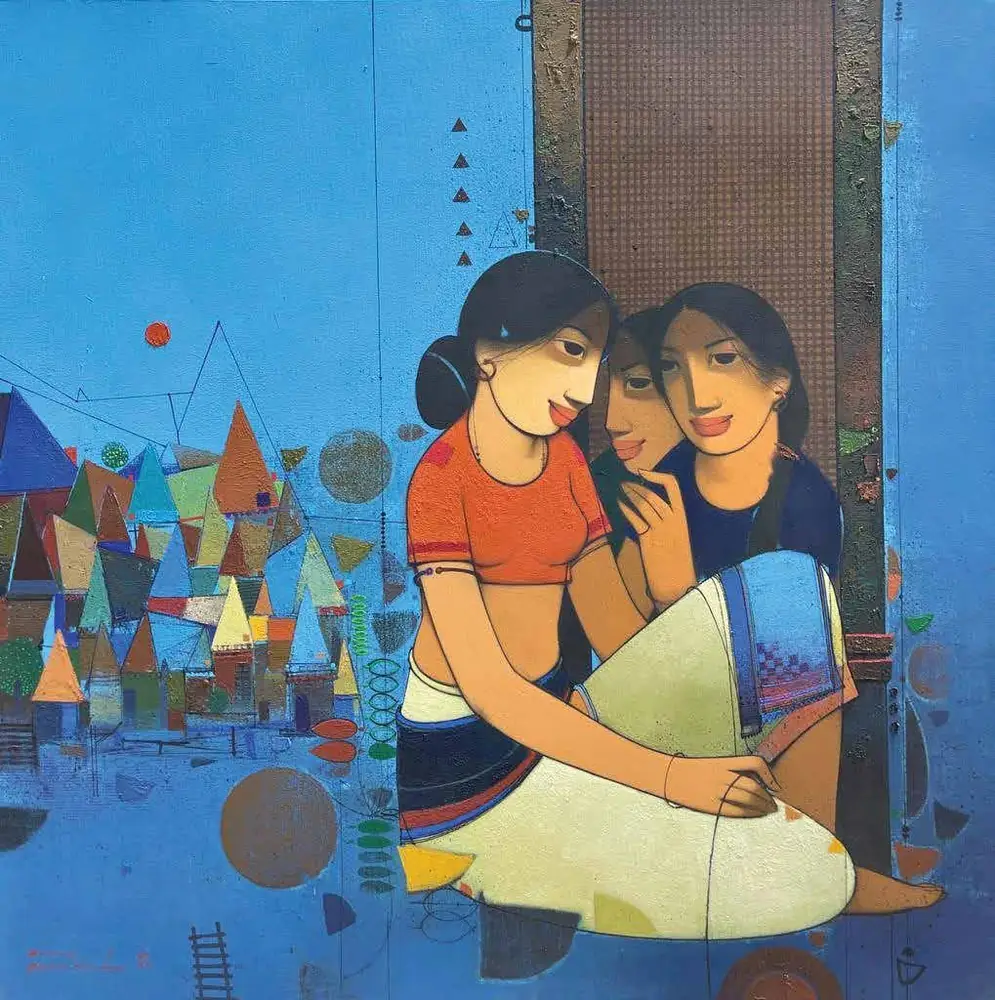
Click to enlargeA moment of stillness by a window. Outside, a field of sunflowers mirrors the warmth she carries within; the patterned curtains and the motifs on her dress speak of a love of flowers and ornament, and of joy found in simple things.
Every letter is read by Rajani. She replies with the price, the provenance, and an honest view of whether it suits the room you have in mind.
Click to enlargeAn imagined ecosystem that may lie above or below sea level, beneath the earth or somewhere beyond the sky. The artist works intuitively, letting that ambiguity shape the painting as it comes.
Every letter is read by Rajani. She replies with the price, the provenance, and an honest view of whether it suits the room you have in mind.
Click to enlargeDrawn from folk narrative traditions, whose stories so often live inside dense forests, the painting brings imagined parallel worlds and reality together into a single multiverse.
Every letter is read by Rajani. She replies with the price, the provenance, and an honest view of whether it suits the room you have in mind.
Click to enlargeFrom a simple thought: how we all try to stay in touch with ourselves even when life feels busy or layered. She is in her element, holding something that grounds her, choosing her own pace.
Every letter is read by Rajani. She replies with the price, the provenance, and an honest view of whether it suits the room you have in mind.
Click to enlargeDurga's tiger, Saraswati's swan and Lakshmi's lotus together: courage, knowledge and abundance in a single trinity, and the animal, bird and flora kingdoms that inspire the artist's work, held in quiet harmony.
Every letter is read by Rajani. She replies with the price, the provenance, and an honest view of whether it suits the room you have in mind.
Click to enlargeIn a cosmos of Asuras and Devas, Lakshmi moves freely, desired by all and possessed by none, reminding gods and humans of the fleeting nature of fortune, until she finds balance beside Vishnu, who alone understands her true nature.
Every letter is read by Rajani. She replies with the price, the provenance, and an honest view of whether it suits the room you have in mind.
Click to enlargeA memory of the mind and a memory of the body: oceans, winds, an eternal flame and the soil that makes us. The lotus stands for our place in a greater unfolding that began long before us, each of us, somehow, at its centre.
Every letter is read by Rajani. She replies with the price, the provenance, and an honest view of whether it suits the room you have in mind.
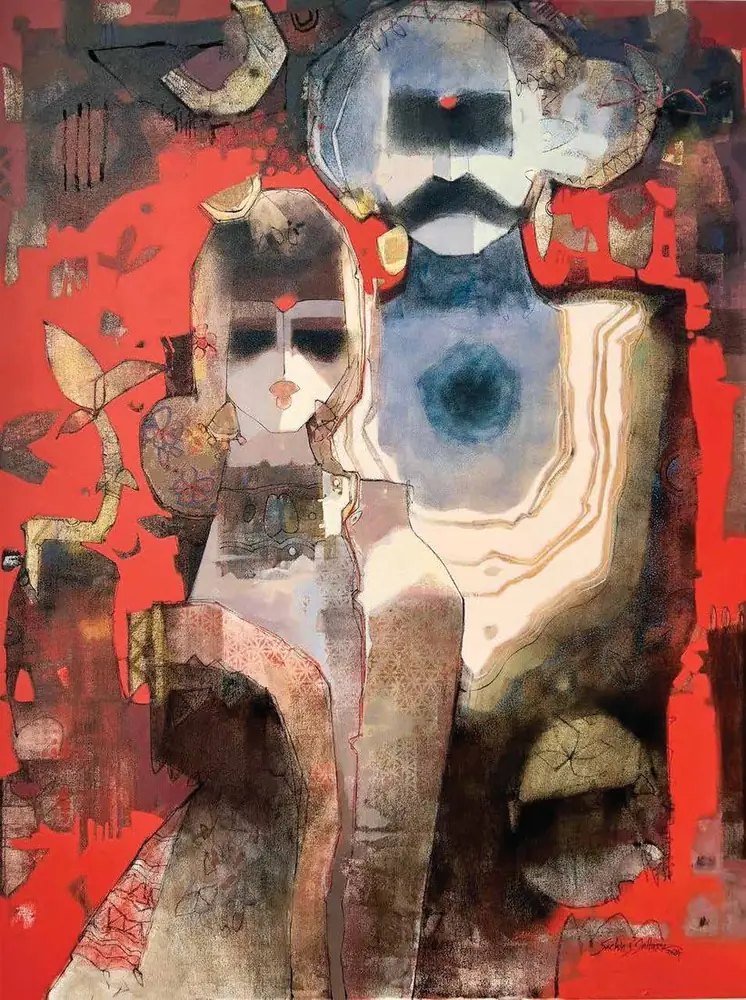
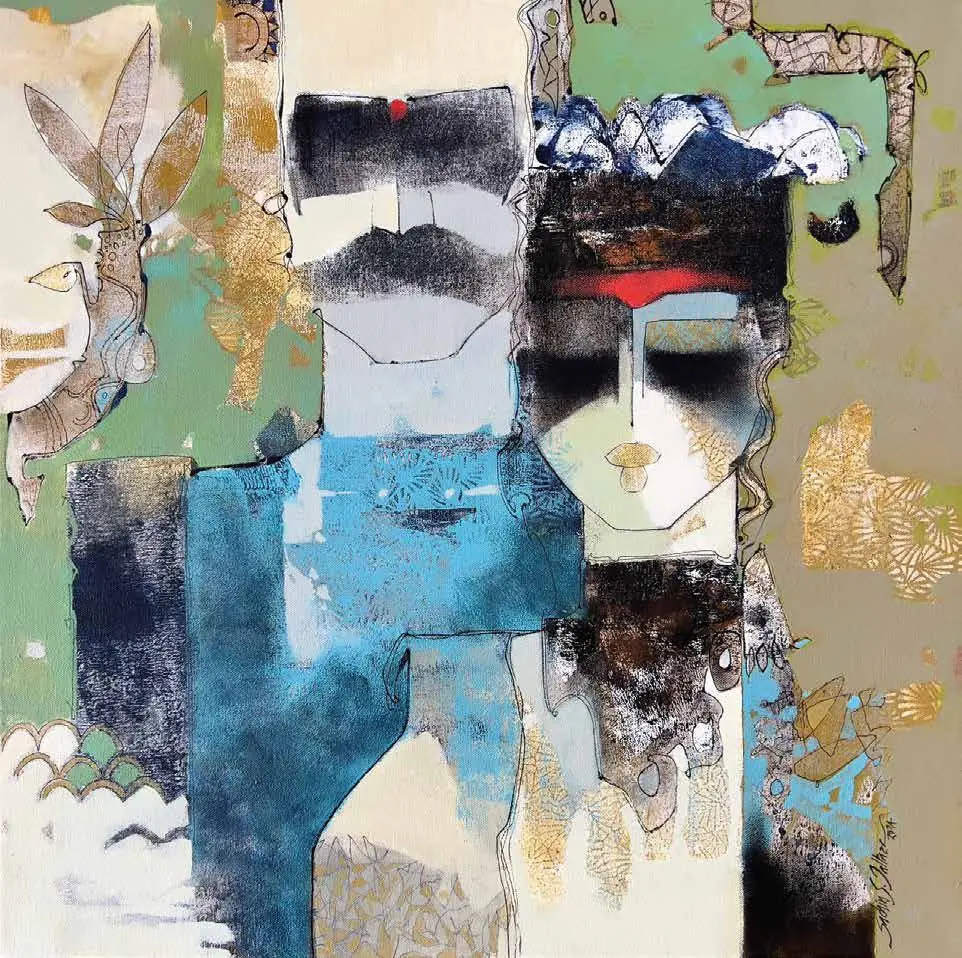
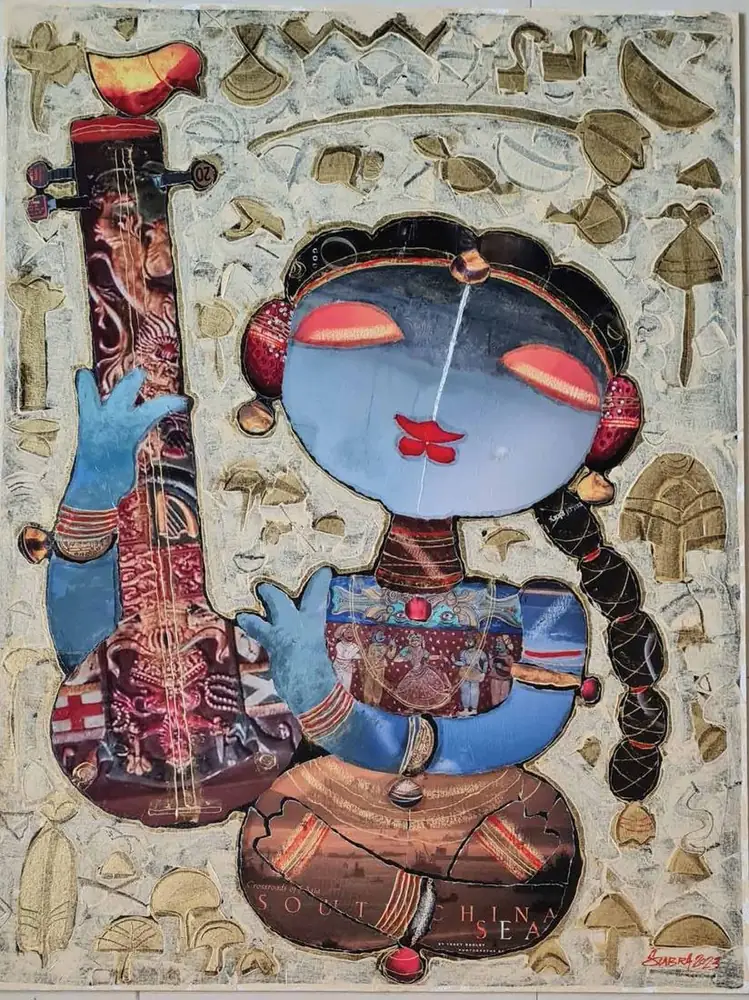
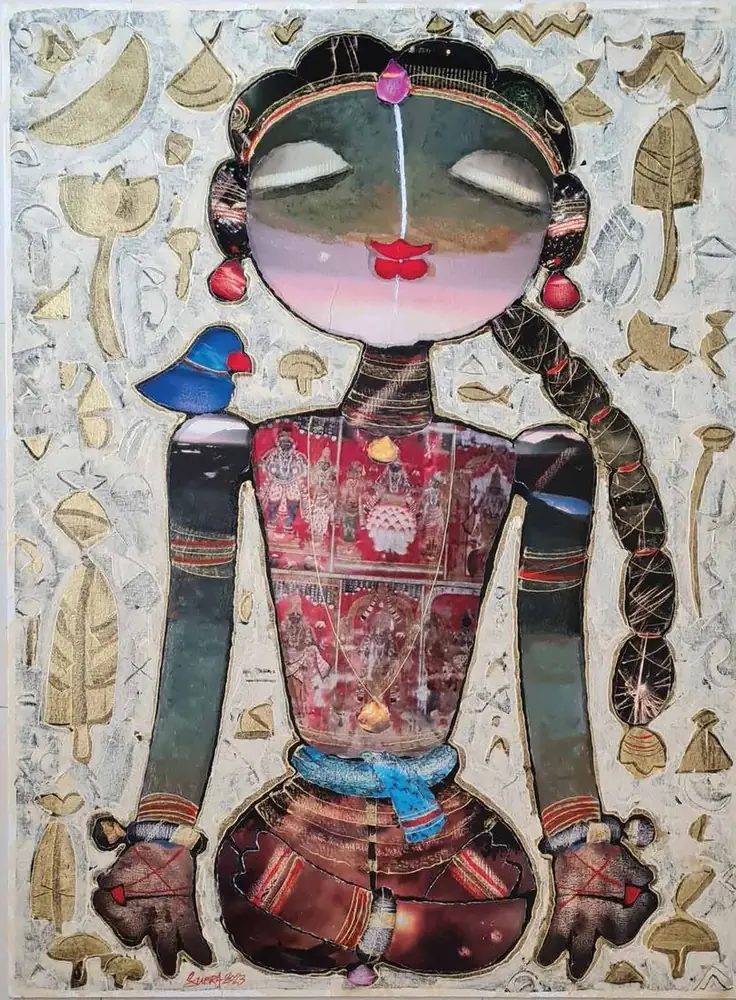
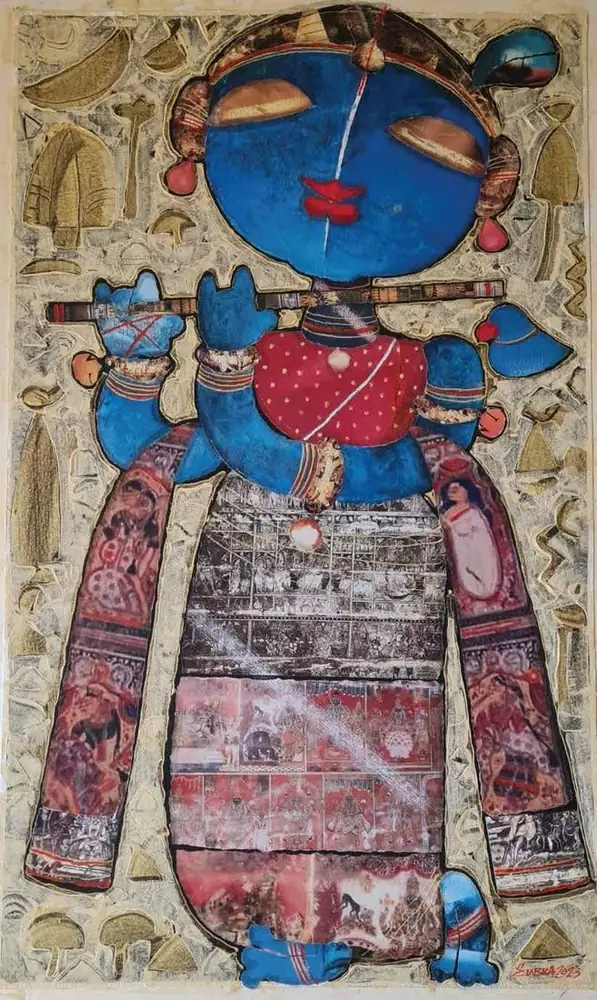
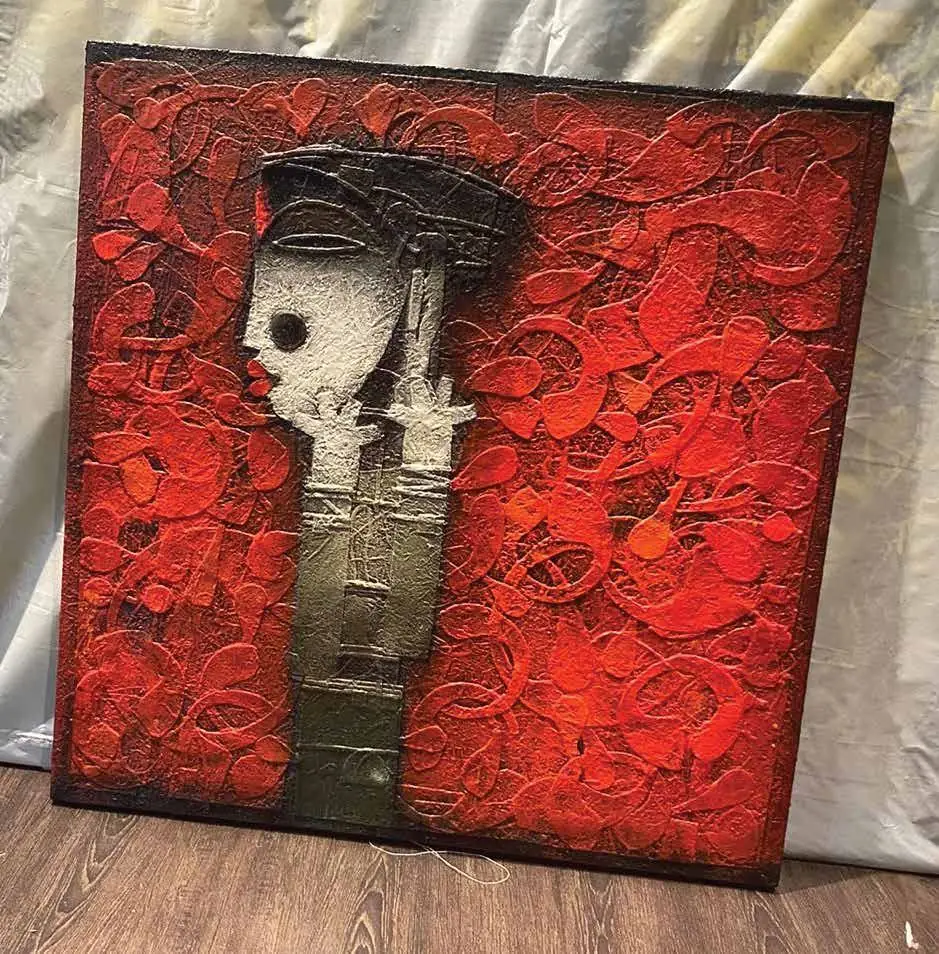
Click to enlargeFrom a series on the avatara, the divine manifestation of God on earth, from Matsya to Krishna. The paintings ask whether divinity is distant, or something a human being can aspire to understand and embody.
Every letter is read by Rajani. She replies with the price, the provenance, and an honest view of whether it suits the room you have in mind.
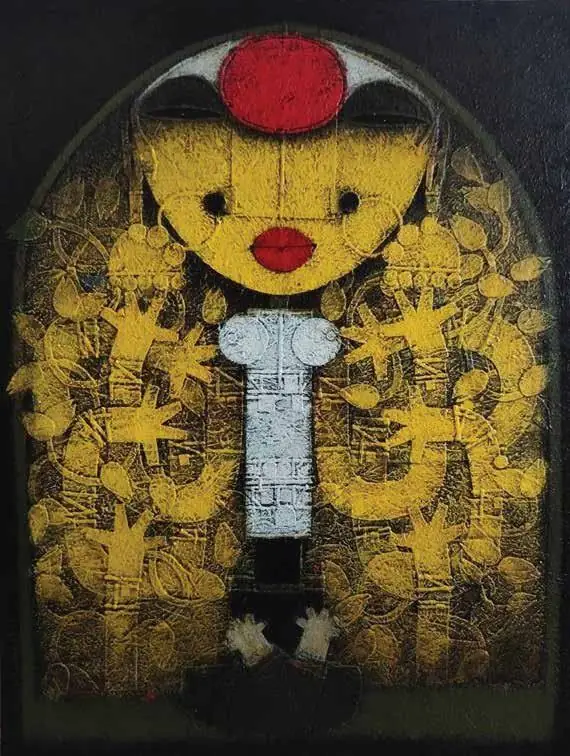
Click to enlargeThe series reflects on a troubled present and the anticipation of Kalki, the final incarnation, believed to end the age of darkness. It carries the hope that spiritual awakening can guide humanity through difficult times.
Every letter is read by Rajani. She replies with the price, the provenance, and an honest view of whether it suits the room you have in mind.
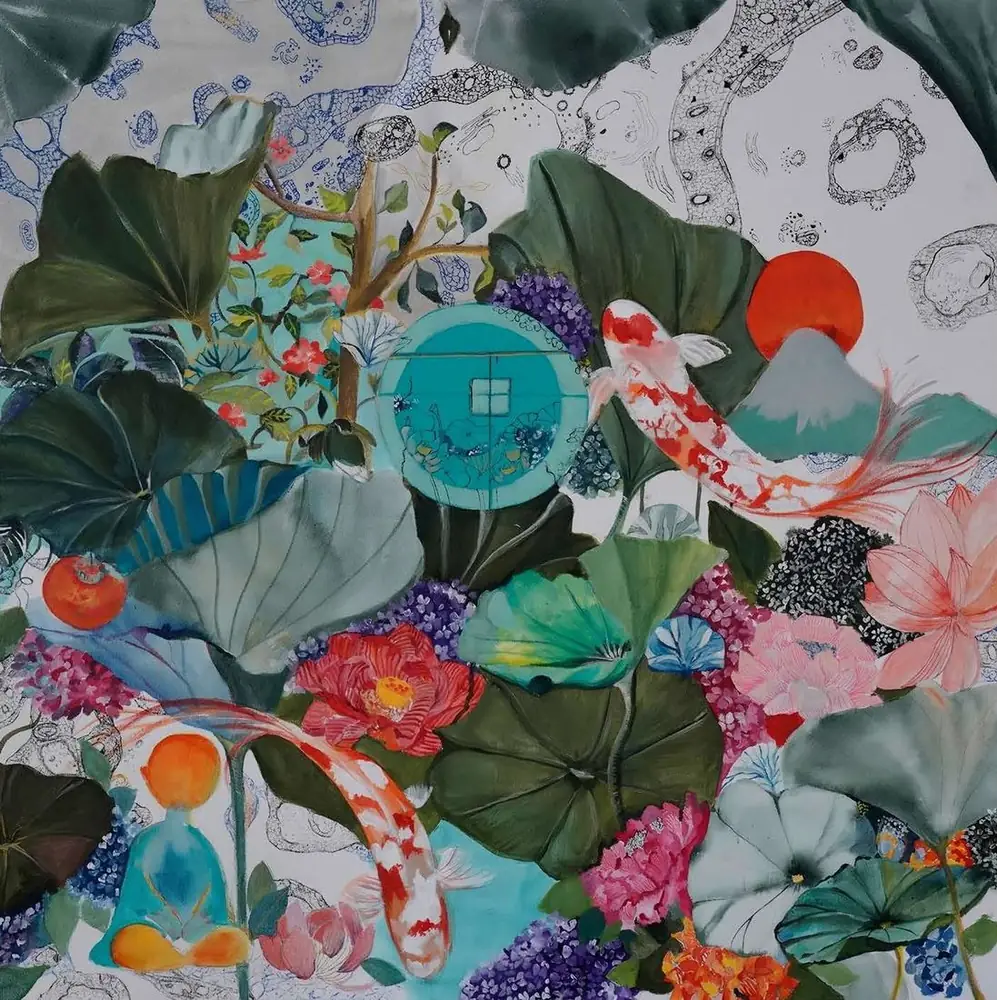
Click to enlargeDrawing on Indian miniature painting, in muted blues, greys and greens with layered imagery and script-like elements from ancient texts, blending mythology with contemporary expression.
Every letter is read by Rajani. She replies with the price, the provenance, and an honest view of whether it suits the room you have in mind.
Click to enlargeA rare black-and-white approach to the lotus: the black lines are the mud, the coloured elements success after struggle. Subtle raised detailing gives the surface a hand-painted dimensional feel.
Every letter is read by Rajani. She replies with the price, the provenance, and an honest view of whether it suits the room you have in mind.
Click to enlargeThe lotus beyond a flat form: textured surfaces in shades of lotus pink unfold like abstract buds, with touches of gold expressing not only the flower but its presence and energy.
Every letter is read by Rajani. She replies with the price, the provenance, and an honest view of whether it suits the room you have in mind.
Click to enlargeEvery letter is read by Rajani. She replies with the price, the provenance, and an honest view of whether it suits the room you have in mind.
Click to enlargeEvery letter is read by Rajani. She replies with the price, the provenance, and an honest view of whether it suits the room you have in mind.
Click to enlargeEvery letter is read by Rajani. She replies with the price, the provenance, and an honest view of whether it suits the room you have in mind.
Click to enlargeEvery letter is read by Rajani. She replies with the price, the provenance, and an honest view of whether it suits the room you have in mind.
Click to enlargeEvery letter is read by Rajani. She replies with the price, the provenance, and an honest view of whether it suits the room you have in mind.
Click to enlargeEvery letter is read by Rajani. She replies with the price, the provenance, and an honest view of whether it suits the room you have in mind.
Click to enlargeEvery letter is read by Rajani. She replies with the price, the provenance, and an honest view of whether it suits the room you have in mind.
Click to enlargeEvery letter is read by Rajani. She replies with the price, the provenance, and an honest view of whether it suits the room you have in mind.
Click to enlargeEvery letter is read by Rajani. She replies with the price, the provenance, and an honest view of whether it suits the room you have in mind.
Click to enlargeEvery letter is read by Rajani. She replies with the price, the provenance, and an honest view of whether it suits the room you have in mind.
Click to enlargeEvery letter is read by Rajani. She replies with the price, the provenance, and an honest view of whether it suits the room you have in mind.
Click to enlargeEvery letter is read by Rajani. She replies with the price, the provenance, and an honest view of whether it suits the room you have in mind.
Click to enlargeEvery letter is read by Rajani. She replies with the price, the provenance, and an honest view of whether it suits the room you have in mind.
Click to enlargeEvery letter is read by Rajani. She replies with the price, the provenance, and an honest view of whether it suits the room you have in mind.
Click to enlargeEvery letter is read by Rajani. She replies with the price, the provenance, and an honest view of whether it suits the room you have in mind.
Click to enlargeEvery letter is read by Rajani. She replies with the price, the provenance, and an honest view of whether it suits the room you have in mind.
Click to enlargeEvery letter is read by Rajani. She replies with the price, the provenance, and an honest view of whether it suits the room you have in mind.
Click to enlargeEvery letter is read by Rajani. She replies with the price, the provenance, and an honest view of whether it suits the room you have in mind.
Click to enlargeEvery letter is read by Rajani. She replies with the price, the provenance, and an honest view of whether it suits the room you have in mind.
Click to enlargeEvery letter is read by Rajani. She replies with the price, the provenance, and an honest view of whether it suits the room you have in mind.
Click to enlargeEvery letter is read by Rajani. She replies with the price, the provenance, and an honest view of whether it suits the room you have in mind.
Click to enlargeEvery letter is read by Rajani. She replies with the price, the provenance, and an honest view of whether it suits the room you have in mind.
Click to enlargeEvery letter is read by Rajani. She replies with the price, the provenance, and an honest view of whether it suits the room you have in mind.
Click to enlargeEvery letter is read by Rajani. She replies with the price, the provenance, and an honest view of whether it suits the room you have in mind.
Click to enlargeEvery letter is read by Rajani. She replies with the price, the provenance, and an honest view of whether it suits the room you have in mind.
Click to enlargeEvery letter is read by Rajani. She replies with the price, the provenance, and an honest view of whether it suits the room you have in mind.
Click to enlargeEvery letter is read by Rajani. She replies with the price, the provenance, and an honest view of whether it suits the room you have in mind.
Click to enlargeEvery letter is read by Rajani. She replies with the price, the provenance, and an honest view of whether it suits the room you have in mind.
Every acquisition from Kanam arrives with a Certificate of Authenticity, and with an invitation to the Kanam Circle: a private profile that keeps your collection, your certificates and your invitations in one discreet place.
Each gathering reaches members before it is announced, with a private preview of the works to be shown.
A digital copy of every Certificate of Authenticity, verifiable at any time, with the provenance of each piece beside it.
Recommendations shaped by your collection, your rooms and your taste, and reviewed personally by Rajani.
Each work is accompanied by a Certificate of Authenticity, signed by Rajani Sashikanth and, wherever possible, by the artist. It is printed on archival paper, numbered, and matched to a discreet seal on the reverse of the work itself.
Its digital twin lives in your profile. Should you ever lend, insure, gift or pass on a piece, anyone you choose may verify the certificate online in a moment.
The Noble LadyAlka Choudhary
KNM-COA-2026-0001
By conversation with Rajani, as ever.
Printed, signed and sealed, travelling with the work itself.
A personal invitation to sign in, with your certificate already in place.
Early invitations, recommendations, and your collection, always to hand.
Enter the email you acquired with, and we shall send you a private link. No password to remember.
In this review copy, the button opens a sample profile.
The Circle opens with a first acquisition, though we are always glad to hear from those who would like to be kept in mind. Write to us and Rajani will be in touch.
Your collection, your certificates and your invitations, kept in one place. Rajani is, as ever, a letter away.
Coming soon. As a member, the details will reach you here, with a private preview of the works, before they are announced anywhere else.
Previously attended · Padma, March 2026
Tell us about a room, and Rajani will keep it in mind.
A companion to The Noble Lady, in a more romantic mood.
A bronze with real presence, for a space with raking light.
Durga's tiger, Saraswati's swan and Lakshmi's lotus, in one canvas.
Sample certificate · for review only
This is to certify that the work described here is an original by the artist named, acquired through Kanam, and recorded under the number below.
Every Kanam certificate carries a unique number, printed on the certificate and matched to a seal on the work. Enter it here to confirm the record.
How buying from Kanam works: from the first enquiry to the work arriving in your space.
Last updated September 2026
Kanam is a discovery collection. There is no online checkout: works are acquired by getting in touch. When you enquire, we share the price, dimensions, provenance and availability of the work you are interested in.
A sale is agreed only when we confirm it to you in writing and issue an invoice. The works shown on this website are an invitation to enquire, not an offer to sell at a fixed price.
Prices are quoted in Indian rupees unless we agree otherwise. They exclude GST, packing, shipping, insurance and any import duties, which we quote separately before you commit.
Payment is made by bank transfer, or another method we agree with you, within 7 days of the invoice. On request we can hold a work for you for up to 7 days; if payment has not arrived by then, the work returns to the collection.
Ownership passes to you once full payment has cleared.
Every piece is original, and most are one of a kind. Work made by hand carries natural variation: a patina, a brushstroke or a grain of wood will differ from piece to piece, and that is part of its character.
The images on this website are faithful representations, though colour and texture will always read slightly differently across screens and in different light. Before you buy, we are glad to send further photographs, a video or a condition report. Dimensions are approximate and given in inches unless stated otherwise.
Where available, a certificate of authenticity accompanies the work.
We pack every work with care and arrange insured delivery within India and internationally. Delivery times are estimates, and we keep you informed throughout. Responsibility for the work passes to you on delivery.
For deliveries outside India, customs duties, import taxes and clearance charges are the buyer's responsibility unless we agree otherwise in writing.
Buying a work transfers ownership of the physical piece. Copyright remains with the artist. You are welcome to photograph the work in your space for personal use and to share it, crediting the artist and Kanam; reproducing it for any commercial purpose requires the artist's written permission.
The images and text on this website belong to Kanam or to the artists, and may be reproduced only with permission.
Commissioned work is agreed separately in writing, including the brief, timeline, price and any deposit. Because it is made for you, it can be returned only if it differs materially from what was agreed.
Kanam represents the artists shown on this website and introduces their work personally. We ask that enquiries about their work continue through Kanam, so that every artist is properly represented and every collector properly looked after.
We use the details you share with us only to reply to you and to manage your purchase. We do not sell your information or share it with anyone for marketing.
We take care to keep descriptions accurate and availability current. If a price or description turns out to be wrong, we will tell you before any sale is confirmed.
To the extent the law allows, Kanam's liability in connection with any sale is limited to the price paid for the work. Nothing in these terms affects your statutory rights as a consumer.
These terms are governed by the laws of India, and any dispute is subject to the courts of Chennai, Tamil Nadu. We would always rather resolve a concern in conversation first: write to us at hello@kanam.world.
We may update these terms from time to time. The version shown on this page when your sale is confirmed is the one that applies to it.
For any question or concern about a purchase, write to hello@kanam.world. We acknowledge every message within 48 hours and aim to resolve it within 30 days.
Kanam is a curated collection by Rajani Sashikanth, Chennai, India. Legal entity name, registered address and GSTIN to be added.
Every work is sold after a conversation, with photographs, dimensions and condition shared in advance, so that you buy knowing exactly what will arrive. Should something still go wrong, this is how we put it right.
Last updated September 2026
Please tell us within 48 hours of delivery, with photographs of the work and of the packaging, and keep all the packing materials. We will arrange collection at our cost and, with you, decide between professional restoration and a full refund, including the original shipping, once the work is back with us.
If a work differs materially from its description or from the photographs and information we shared with you, tell us within 7 days of delivery. Return it unaltered and in its original packaging; we will cover the return shipping and refund you in full.
Because each work is chosen with you in conversation, and most are one of a kind, sales are final once a work has been delivered. If a piece does not sit in your space as you had hoped, speak to us: within 14 days of delivery, and at Kanam's discretion, we may be able to offer an exchange for another work of equal or greater value, with shipping at your cost.
Commissioned work; works bought after viewing them in person, at a Kanam gathering or by appointment; and works that have been altered, reframed or damaged after delivery. The first two sections above still apply to commissioned work that arrives damaged or differs from what was agreed.
If you cancel before the work has left us, we refund you in full, less bank charges and any crating or insurance costs already incurred. Once a work has been dispatched, the sections above apply.
Approved refunds are made to the original payment method within 14 working days of the work being received back and inspected, or of your cancellation being confirmed. International refunds are made in the currency paid; differences in exchange rates and bank charges sit outside our control.
Please speak to us before sending anything. We will arrange packing and insured collection so that the work travels back as safely as it came to you.
For any question or concern about a purchase, write to hello@kanam.world. We acknowledge every message within 48 hours and aim to resolve it within 30 days.
Kanam is a curated collection by Rajani Sashikanth, Chennai, India. Legal entity name, registered address and GSTIN to be added.